Showing posts with label #writers. Show all posts

Monday, January 11, 2016

Writing Hacks for the Creatively Stunted

Over the years we pick up tidbits of information, useful tips and tricks we think (or pray) will help us through everyday life. Some people call these life hacks. I call these "nuggets of wisdom from people with more time on their hands than me to think this stuff up because I'm too busy worrying how I'm going to do all this stuff to be able to sit down and think of these awesome ideas."

Too long?


So, years ago I started a file on my computer with hacks, hoping I'd be able to use them more and organize my life.

Until I forgot I had a file full of these freaking awesometastic ideas that were supposed to make me wonder-wife and super-mom!


Well the same thing happened to me with my writing life. I'd come across these really nifty hacks or compilations of writing tools and I tucked them away in a file on my computer. And every time I sit down to write words, I never ever think of them. EVER. I forget the folder even exists until I come across one online somewhere and go to save it in that file.


So, as 2016 lays down its carpet of brand new possibilities....I'm digging in to this file folder and sharing with you what I've saved over the years and calling it......

WRITING HACKS FOR THE CREATIVELY STUNTED

1. I found this gem recently. Here's some ideas on how to give your characters a quirk. You want your characters to be relatable and real, and if you give them a humanized quirk it'll help your reader attach to them. Try and think outside the realm of lip biting and nail chewing.


2. Body Language! Showing body language is a biggy. It is important in scene blocking and can also be as communicative as dialogue between the characters. It helps the reader solidify how you're presenting a scene. If your character's lying, we may not know as the reader by her dialogue, but if she's shifting her feet or if he's not making eye contact these help give the reader clues and deepen the point of view.


Another way to use body language is also if your character has an illness or disease or if you've given the some kind of quirk. Let's use anxiety as an example. If you consistently remind the reader she has anxiety, for one, that's telling. But also, it'll stick out like a sore thumb and be hit home so hard it'll annoy the reader. Instead, try showing the results of her anxiety with body language instead.


3. Showing vs. Telling. It's a hard skill to nail for a lot of writers. But I found these cool little hacks of descriptors that helps fill in those blanks when you're trying to bring narrative to life and let the reader experience the scene with the character versus being told.

For instance....Telling - She had long hair.  Showing - Layered mousy brown hair framed the edges of her heart-shaped face, setting off her jade eyes.


4. And last, but not least, emotions. They play a huge roll in our characters development. And at some point in your book your character will probably hit all six of the major emotions. But in order to take your character deeper and really strengthen their arc, try narrowing in on the different levels each of the major emotions has. As you can see by this nifty chart below, there's far more levels and facets of each emotion. If you zero in on one, it can help you take your character to a deeper point of view and explore.


Happy Hacking....er....I mean writing!


Monday, October 5, 2015

A Career as an Author: The Reality


As a literary agent, I see the starry eyes of newbie writers everywhere.

  • "Did you know Stephenie Meyer had a dream and Twilight was published 6 months later?" 
  • "Amanda Hocking made 2 million dollars self-publishing." 
  • "JK Rowling went from sleeping in her car to becoming a billionaire."

You hear these recycled lines everywhere on forums and in writing groups. The stuff of legends. The writers who made it. These anecdotes give hope with each rejection, fuel the fire, keep the dream alive. It's like the waiters in Hollywood dreaming of becoming the next Brad Pitt or Halle Berry without the star-studded veneer.

The other side of the coin though, is these anecdotes give rise to high expectations. I've met so many writers who believe by self-publishing they'll be the next Amanda Hocking, or by finding a literary agent they'll be the next franchise. It creates an unrealistic perception of what it means to be a career author. And when a literary agent sees that idealism shining through a newbie writer's pitch, they run the other direction.

Because, writing is a career. And like any other career it takes time. On average it takes about 10 years to get your first book published. And that's probably not the first book you've written. Following that, it takes about six successfully published books for you to start earning a living as an author. That's a few decades. That requires a lot of patience and dedication.

For every legend, there are thousands of writers who haven't made it, whose rejections litter the pathway, whose debut novel was a dud, who gave up, because the dream was taking too long and was too much work. My favorite response to those who ask how long it takes to become a successful writer is to ask, "if you started a job tomorrow at an entry level position, would you expect to be the CEO within the year?" Not to say that it hasn't or won't happen. Just be ready to fight to keep the dream alive for more than a few years. 

So before you approach your next literary agent or editor or consider self-publishing, ask yourself, are you willing to do the time? Once you know and accept the reality of becoming a career author, the more likely you are to succeed.

And don't forget to submit to me when you do have it figured out: marycmoore.com.

Friday, August 7, 2015

Be A Tease!

Everyone loves a tease. That tiny morsel of goodness to whet your appetite and leave you begging for more. The build up of anticipation for something, whether it's food, books, movies, a hot date...it's what keeps your attention and focus, leaving you aching for more.

Teasers are an important part of book marketing. Done right, you can grab a brand new reader's attention in less than a minute. Done wrong, you can turn a potential reader away for life.

Here's a teaser for my new book out today, ELUDING ILLUSIONS


Sometimes teasers can be done using a tagline or a "hook" for your book. Here's another using a tagline for my book, VEXED.


Sometimes teasers can be lines or quotes from your book.


You'll notice in the teaser above I put my copyright info and gave credit for the picture to the owner of it. NEVER use pics of celebrities or steal pics from the interwebs to use in teasers. You can get in serious legal trouble without express written permission from the rights holder of the image. There are many stock photo sites you can buy images from to use in your teasers. 

And if you don't want to buy images, some photographers will allow you to use an image if you credit them in the photo, as I did above. But you must have their permission to do so. Or you can use plain backgrounds and make your own using images from your book cover art files as I did in the first two teasers. Ask your cover artist for help if you want banners made up or blank teasers you can manipulate using your cover art files.

A teaser can even be as simple as just an image and your release date to start getting your cover in front of your potential reader audience, like the one I did above.

Also, please remember when making teasers to keep the fonts legible.


While those are cool fonts and it makes it eye catching, it's somewhat hard to read. Teasers should entice a future reader, not make them work for it or get frustrated because they can read only every other word because of font, or colors blending in over background images. 

Try can keep them as crisp and eye catching as possible.


Remember to change up the teasers. 
  • Have a sexy one if it's a romance novel. 
  • Have a more serious and dramatic one that shows the depth of the book as well. 
  • Have a tagline hook as we mentioned earlier. 
  • A PG level one for general audiences is also a good idea. 
  • Have one as well that gives perspective and insight into the personalities of your characters. 


Like the one below for my novel, VEXED, it gives you a sense of the banter between the main characters.


Teasers can also can turn a potential reader into a lost sale. Remember that a variety of people will be seeing your teaser. So, unless you're posting in a specific group of people, please make your teasers for a general audience. If you write BDSM or Erotica, make sure you have a teaser specific to those audiences, but don't post those in a general FB group using graphic sexual references. Have a cleaner version for the masses and put a warning that the book itself will contain language, violence, or graphic sex. 

Also, please, for the love of all humanity, make sure your teasers don't have misspellings or typos. It's a reflection on you as the author. Put your best work forward.


Go forth and tease the world!!


Thursday, July 30, 2015

Writing A Series

About two weeks ago, my book King Stud was published, and for about an hour I was just like this:


Yeah, I was just that excited. Sadly, though, the euphoria didn't last. I mean, book promotion can be fairly time consuming, but it is fun to get out and meet new readers. No, there was one thing that brought me down to earth faster even that writing an unimaginable number of blog posts. You wanna know my biggest buzz-kill?


The sequel.


King Stud is the first in a five book series about the O'Connor family. I know which O'Connor kid will star in each book, who they'll fall in love with, and the order of their stories. I even know the book titles!


King Stud  -  Loose Cannon  -  Same Love  -  Rock Solid  -  Queen Bee 


The problem is the writing. I can think of ways to make a series out of every book I've written, but I've never actually done it before. (So if you're looking for a post where some real experienced writer with seventeen series under her belt tells you exactly what to do....um, sorry. I'll make it up to you. Promise.)

We've all read series where characters or events morph from one book to the next. You know, that, "wait a minute" feeling you get when something bumps you out of the story and you have to dig through the previous book to figure out if there's really an inconsistency or if you're just crazy.

Probably you're not crazy.

Rather than talk about How I've Done It Before, I came up with the top three things I'm fretting over as I approach writing the next book, and how I plan to deal with them. 


1. The Details

When I finished King Stud, I knew that Ryan's eyes were blue and Dani's were hazel/green and Ryan drove a black Ford F250 and Dani drove a white Mini Cooper. Those are pretty important details, but there were others - minor characters' names, dates in the timeline - that got a little bit foggy in the time between finishing the project and getting it published. And now that I'm starting book two? Foggier still. No one can keep it all in their head, so here are some strategies for maintaining continuity between books.


  • The series bible  I learned how to put together a series bible in a class by Lisa Wells through the Lawson Writing Academy. (Jump HERE to see the course description.) For my series bible, I'm using power point. I started with a list of all the main characters and another list of key locations. Each book has its own section, and each character has their own page(s). I've got notes about story lines that are particular to each book, and lines that cross over several books. I've got pictures of the characters, because I like to work from an image. My goal is to have as much information as possible in one place. 

The cover of my series bible for The Seattle O'Connors

  • Detailed character sketches  I know this kills the creativity for some people, but I like the character outline I use. It's basically something I cut and pasted together from a couple different authors' outlines, and it helps me get to know the characters as I write them. I save these sketches to my thumb drive in each book's folder, and put summarized versions in the series bible. If I know Maeve is going to feature in a scene in book three, but I haven't written her in a while, I can take a glance at her sketch to make sure I get it right. I can amend the doc as I go along, if I discover new things about the character, but the hard details - height, weight, eye color, basic personality traits - are preserved.

  • Consistent beta readers I know if lose track of something between the beginning of a book to the end, my beta readers call me on it, and I'm hopeful that a few of the people who read King Stud for me will be willing to take a look at the subsequent books. Hopefully. Right guys?


2. The Energy 

So how many times have you picked up the fifth book in a series and thought, "yeah, they shoulda quit at number four"? Because not every premise/character/theme can sustain an endless number of books. Once an author tosses a story out into the universe, it belongs to the readers, and their affection for the characters can motivate an author to keep writing. Authors love their characters, too, and that can keep them pushing past the freshness date.

So how am I going to sustain the energy for the five books I have in mind? There's a couple plot lines in King Stud that won't be entirely resolved until book five.  Each book will stand on its own, with storylines that reach a satisfying conclusion, and some lines will carry over two or even three books.I don't want to give the big ones away yet, but if I get it right, readers will keep coming back to see how it all works out.

And then, that's it. Finished. Done. I can see a couple possible novellas involving side characters, but there are only five O'Connor siblings, so when they each have a book, I'm on to the next project.


3. The Writing

And here's where the irrational terror sneaks in. I've done a fair amount of planning already. What if the characters insist on taking the story in a completely different direction? What if my ideas don't work? What if? What if? What if?

Yikes!

The only strategy I have to deal with this is simple. 


Write. 


Butt In Chair, Hands On Keyboard. Get the words on the page. Which I'm going to start doing. Any minute. As soon as I'm done hyperventilating. 

I expect to learn and grow as a writer, so my approach to book five, Queen Bee, will be different than when I wrote King Stud. It's all a process, but in the end, I expect to be as happy as Johnny Karate down there. Family is important to me, and so is acceptance and open-mindedness. I've got four more books to explore how those themes work in the world of The O'Connor Family.

I know there's stuff I haven't thought  of yet, so if you know what you're doing with series writing, feel free to leave me ideas in the comments. Cheers!
Liv


If I've whetted your curiosity, here's a peek at King Stud's cover...


Buy Links


Shh...it's A LOT cheaper from Evernight...don't tell...

Monday, June 22, 2015

Is it Better to Have Loved and Lost Than to Have Never Loved at All?

by Charlotte Levine-Gruber

photo by William Creswell

I've titled this post with a quote (modified) from Alfred Lord Tennyson's poem, In Memorium. For me, it's apropos. Last month, I lost my first love. Someone who was the most important person in my life for decades. My heart still aches. While I've gone back to work and tried to put some semblance of "normal" back into my schedule--the loss still feels fresh and painful.

Tennyson lost a beloved friend to a sudden and unexpected death. While I didn't lose a friend, my loss was unexpected. I was completely unprepared--as if you could prepare.

I pose this question:

Would you avoid the pain of loss, if it meant you never had a chance to love __________________(fill in a name).

Our blog is all about writing. So let's substitute your person above with a "life dream."

Like any great love, writing has many ups and downs. Sometimes great joy, and sometimes heartache. Let's be honest--writers have a lot of heartaches. 

The words may not flow. Writing anything to hit your daily goal only makes what I call "forced words." These awkward words are readily apparent to anyone reading. You may as well just write THESE WORDS WERE FORCED.

Even then, writing is like no other job. As Marissa just posted last week--only other writers truly understand a "writers high." You can decide what to write, who to write, where they live, do you build a new world, or do they live in your neighborhood? You can even decide who to kill and who kills.

If you think about your favorite author and how much you love a book, answer these questions: Do you talk about characters with friends and neighbors?  Get mad when characters do stupid things? How about when your favorite series ends? Do you re-read favorites?

The first time someone read my manuscript and talked about my characters floored me--they knew...MY PEOPLE?

Jonathan Mayberry once said of his writing gig; "I get to live in my imaginary world, with my imaginary friends."

But to get to Jonathan Mayberry's level, you're guaranteed a lot of heartache and rejection. 

In my PitchWars group, most writers have queried more than one hundred agents before being offered representation. One hundred rejections. And that's all before submitting to publishers.

So, back to my question:

Would you rather have loved and lost, or never loved at all?

My dear, sweet, prickly, sometimes irritable, and always stubborn mother had a heart attack last month. I've never gone through anything that hurts this much. 

Would I trade to eliminate the pain? 

Not a chance. 

The gift of loving such a wonderful woman makes up for every bit of pain. And I had the ultimate privilege of calling my favorite person "Mom."

At the funeral, even through my thick fog of grief, I realized how many lives my mother touched. 

So, writers, if you love what you do, keep working, keep trying, and don't give up. Remember, it takes a writer to become an author.


Wednesday, June 10, 2015

Process Makes Perfect?


The writing process of a an author may seem simple to the outside world. You get an idea in your head and you just write! It's this magical experience that takes you to another world, and the words just vomit out of you.


This is closer to the truth:


We often times have zero control over our muse and when it wants to show up. It may come from a song, a life experience, divine intervention, drugs....


 Each story is different, some characters scream louder than others to be written. Sometimes you have multiple plot bunnies hatching in your brain and you have to start a couple stories at once. Sometimes it's like pulling teeth to get your characters to talk to you, or amongst themselves.


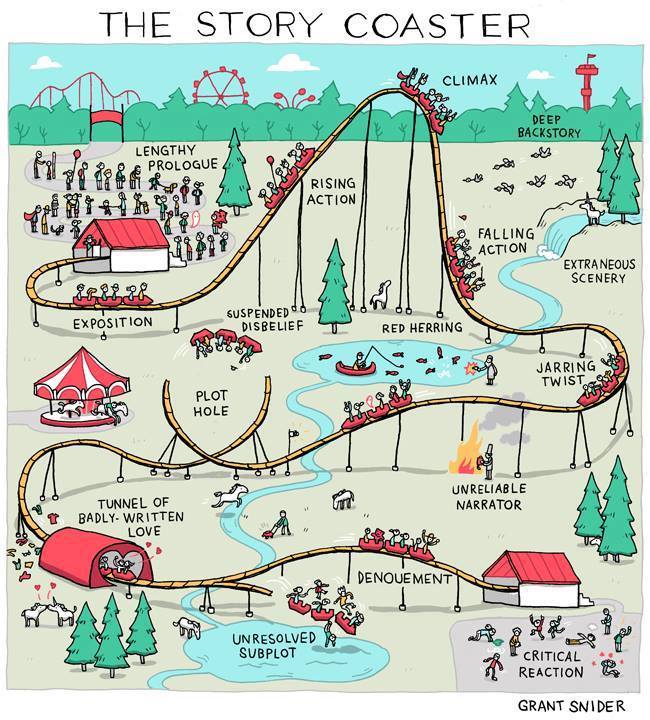
Sometimes writing is a giant roller coaster ride. (For the record, I hate roller coasters.)


Often times life gets in the way and absolutely no words get written for days, months, sometimes years.


This is pretty much me with every book I write:


Everyone has felt this at sometime in their career (more often than not, about every manuscript)


I wish with all my might that this was a real place. It would make it so much easier!!


Every writer is different with their process. Some write really fast first drafts but spend weeks and months, even years in the editing phase. Some plot every detail out with outlines and storyboards, sometimes even visiting the cities where they're setting their story so every detail is perfect and takes years in the making. Some spew forth words perfect on the first try and immediately land a six figure multi-book deal. (This is probably as mythical as Mr. Snuffeluffagus.)


But the point of this post (if there really is one besides just tossing around really awesome memes) is to say, do what works for you to get your story from your brain to the page. No one way is right. No way is wrong. If it works for you and makes beautiful words, do it. Sometimes it takes a while to find which way works. And that's okay, too. In the end, just never give up. If one way doesn't work, try a new one. Or invent your own. Spew forth all the words, my friends!


Monday, June 8, 2015

Reasons For Rules: An Agent's Perspective

Having been an unpublished author seeking an agent, I know how daunting a task this can be. Each agent has different submission guidelines and there are so many RULES. It seems as if you break any of these sacred RULES your query will go right in the physical and metaphorical trash, never to be seen again and you as an author will be laughed out of any possible opportunity to be signed. And when those rejections start rolling in, you question yourself and your writing. What RULE did you break? Then you get angry and frustrated. Why are the RULES so dang important anyway? Isn't it about the writing? Shouldn't they see you for the amazing talent you are and brush all that other stuff away? You start reading about authors who have broken the rules and been hugely successful and you  lurk on online forums to commiserate with other writers that are feeling as bruised as you are. Pretty soon you are convinced that agents have too much power and that their RULES are just petty ways of making authors jump through silly hoops for their own amusement. 
Now, being on the other side of the fence, I find myself spouting off RULES to hopefuls at writer conferences, online forums, on Twitter, and everywhere in-between. I have unintentionally become a gatekeeper, because on this side, the RULES have REASONS. Oh. So for your sanity and mine, I am going to explain the REASONS behind the seemingly random RULES. I'm sticking to fiction literary agent RULES to keep it short. 

Rule #1: Follow each agent's individual submission guidelines down to the letter.
Reason: Every agent has a different system for shifting through submissions. Their guidelines are based on what will help them get through the slushpile in the most efficient manner. By not following the guidelines, you are causing a disruption in the system, which means it will take longer for the agent to consider your submission and respond to you, in effect wasting their time and yours.  
Rule #2: Word count, 55k-75k for YA, 80k-90k for most adult, up to 125k for historical or fantasy.
Reason: Word counts are a throwback from traditional printing. There was a standard specification for print book sizes, which meant if your book fell outside those specifications, it was less likely to be picked up. Because of this, readers got used to a standard book length. And although publishing mediums have since evolved, the standard has yet to change. Thus, your book is easier to sell if it falls within the word count parameters. 
Rule #3: Classify your work as only 1-2 genres, plus age group. 
Reason: We want to know what genre your book falls into, so we know which editors we would place it with. Do not say "it's a unique new genre," not only is this not true (trust me, after slogging through the slush, I can say with confidence, you are not the first to come up with whatever concept you have come up with) it shows us you do not read within your genre, and do not understand it. We are looking for experienced authors who grasp who their reader audience is. 
Rule #4: Address the query to the agent you are sending it to.
Reason: Not only is this courteous, but it shows you've at least done a bit of research before querying us, which means you think we would be a good fit for your manuscript.  
Rule #5: Only query agents who represent your genre. 
Reason: We as agents, develop relationships with editors and publishing houses. If we specialize in a genre, that means we are experienced both in reading/selling said genre, but we also know exactly which editors would be right for it. That being said, there is no harm in querying an agent you are not clear on, especially those who list "commercial fiction" as one of their genres. Just try to avoid querying an agent who only represents thrillers and mysteries with your inspirational memoir.
Rule #6: Have your manuscript finished, edited, and polished before querying.
Reason: Although a lot of agents will do edits before shopping your manuscript, their time is limited. They are not going to be willing to do extensive edits on a project, so if you send out a manuscript before it is finished, you are essentially setting yourself up for rejection. 
Rule #7: Do not mention how well the book will do, or what great writing it is, or how you plan to be the next JK Rowling. 
Reason: The reality of publishing is much harsher than the success stories of JK Rowling and EL James. Most authors don't start making a living off their writing until after their fifth or sixth successfully published book (this is true for self-published authors as well) and even then you're probably not going to be able to buy that island. On average it takes years/decades to become financially successful as an author. We are looking for clients that understand that and are willing to put in the time and energy toward that goal. 
Rule #8: Keep your bio to simply your experience as a writer as well as any relevant experience to your novel (i.e. if you're writing legal thrillers and are a lawyer, mention this). Leave out the names of your pets, your dreams of stardom, your inner demons, and any other personal/professional background.
Reason: Agents are professionals, and they are looking for professional clients. Your query letter should have the same information that a cover letter for a job resume would have. Relevant experience only. Of course once we've signed you, then the relationship may evolve to a more personal level, but there will always be a professional line. 
Rule #9: Keep the query short. 
Reason: The slushpile is no joke. There are hundreds of submissions that an agent or agent's assistant have to read on a monthly basis. If a query is too long, out of necessity, we will skip most of it. 
Rule #10: Only nudge an agent if you have an offer of representation or they have not responded past their posted response time.
Reason: Again, the inbox is flooded already. If you nudge, odds are we won't read the email until after we've seen your original query, (unless in the subject line are the words: OFFER OF REP), so you are just adding to the pile and possibly being annoying. However, things do slip through the cracks. Usually in the submission guidelines, an agent has posted their normal response time. If it is past this date, go ahead and nudge. If it's a full manuscript, nudging after six months is reasonable. 

I hope this post has helped you make sense of a seemingly random set of parameters and given you more confidence to keep going. It is good to remember that most agents are hopeful that authors will follow these RULES, but we are also human and understanding. We may reject you because you didn't follow one of our RULES, but that doesn't mean you are blacklisted and we never want to see your face (or pen) again. In all honesty, we are so inundated with queries, we probably won't remember your particular RULE-breaking query in the first place. So don't be nervous, just do the best you can. 

There are many more RULES that crop up in all aspects of publishing: formatting, grammar, design, editing, writing, contracts etc, even self-publishing, and I'm happy to give REASONS for these in the comments below. 

As for the RULE-breakers out there. You know what they say...

Friday, May 1, 2015

THE ESCAPE ARTIST - GETTING AWAY FROM DISTRACTIONS by Janice M. Wilson

I NEVER HAVE TIME TO WRITE!

With so many daily distractions in a writer’s life, it’s a small wonder any books can get written and published.  As any artist does, a writer needs time and space for personal expression.  That includes no interruptions from kids, tv, phone calls, the boss, bad weather, etc.

I know.  I know.  Only in a perfect world.  I’m a Mom too, and sometimes the only way I could get any writing done was to check out of everyday life, and check-in somewhere for a retreat. 

For me, running  away to some small hideaway town, amid a patch of trees or a beach always does the trick!  (with an outside desk, of course!)

If you can afford it with time and cost – RUN!
If you can’t – here are a few starving-writers’ tips to block out a chunk of literary abandonment.


NO WORRIES, KIDDIES. MOMMY WILL BE BACK AFTER IT'S A BEST-SELLER!

No popularity – you can be in pjs and tuck away from people constantly bugging you on texts.  
No catwalk.  You don’t have to be ‘on’ all the time.   The purpose is to sit and write.  You don’t have to have a fashion show to curl up with a pen, paper for laptop. 
This is one time you can really pack a light bag!

OK, MAYBE NOT THAT LIGHT!

No chores – you only have YOU to take care of.  Eat when you want, what you want, sleep when you want. And no one can demand you have to get up at any time to do things.
YOU MEAN, I DON’T HAVE TO WHIP UP DESSERT?

No excuses – You’re there to write.  That’s it.  And you can’t bring work with you.  Writing is enough work as it is, but something you must do.  You can only slowly float along in your own imagination and write it out.

WELL……… I WILL WRITE AFTER THE DINNER PARTY!

It can be done!  Think of places that you know would whip up your imagination.  Find a way to go there.  There are many, even a day and a picnic at the park or a lakeside.  Cabins are cheap off season and so are the beach bungalows.  Amtrak gives away ‘trip scholarships’ to writers for space, time and inspiration to write as you travel.  There are plenty of other scholarships and contests hosting retreats and conferences to win. 

Don’t let the parent trap keep you from getting away!  Switch weekend with the spouse to watch the kids and take a break alone or with friends for a literary retreat.

I JUST NEED A LITTLE TIME TO WRITE.  LEAVE ME ALONE.

It can be cheap!  It doesn’t have to be a private island in the Carib.  It can be a lakefront cabin or a hostel.  Somewhere that no one knows you so no one will probably bother you.

 THE WRITERS COTTAGE? IT’S JUST DOWN THAT LANE (3 MILES)

Swap houses with someone you know and trust.  This will probably give you both a nice little cheap getaway.

Bring a gang of like-minded writers who are also desperate for some quiet and space – split the cost of the place you stay. Hostels work well for that and maybe some bed and breakfasts, which would eliminate the need to cook 1 meal, at least!

 You don’t have to travel that far, even if you can afford it.  Getting away within an hours drive may also acquaint you with some awesome places nearby that you would nOt bother visiting.  And you can write about THAT, if not for a creative exercise!

SLOW SPEED AHEAD!   I HAVE A NOVEL TO WRITE!

It can work!  Getting away from the norm is one of the best antidotes for the dreaded writers’ block, so pack a weekend bag of comfies, good drinks (coffee too), some nibbles, cozies, papers, pens, (or your laptop) to get away from the usual backdrop.

I JUST BROUGHT A FEW THINGS I NEED TO BRIGHTEN UP THIS ROOM A BIT!

Breathing in new experiences ALWAYS stirs up new ideas to write about and the yearning to curl up and actually do it.  

A few good ideas to take along:

                1/  Set some rules – If you go with other people, you need to establish some guidelines or it will turn into a gab & wine weekend.  That’s fun too, but the purpose is to get away and write uninterrupted.  If a few buffers are agreed on everybody can be relaxed, ready to write, and be productive.   I suggest quietness, earplugs for music, serene surroundings, lots of fluids you like and trusted pen-friends.

FREEEEEEEEEEEEE, TO WRITE!

                2/  Set some goals – You are there to produce, so set some goals.  Are you writing a query? Maybe have some sprints against a clock.  Not for competition but just for motivation. Some writers who gather will bring a small door prize gift for the one who writes the most words but the key is to reach some goals that you couldn’t do on normal days.  Groups will often write throughout the day and share that ‘line of the day’ that they came up with before going to bed.  If you go with friends you can all help with a celebration dinner too, and all clean up quickly to return to writing.  Maybe agree to have a critiquing time.

‘READ ME SOME MORE’ – magic words to a writer!

                3/ Dry out – Now I’m not necessarily talking about alcohol or drugs but daily habits, like watching too much tv or Pinterest browsing – those damnable vortexes that suck up our time otherwise.   Whatever it is that keeps you from writing on your free time – don’t allow it.  Shopping, Face-booking, texting, reality tv or worse – whatever keeps you from never having time to yourself to write – BLOCK IT! TAKE OUT OR TURN OFF THE WIFI.  Maybe you should put your phone on airplane/sleep mode.

THY CRAFTINESS PLAGUES ME, OH PINTREST!

                3/ Take a few breaks – Yes, take a break from taking a break.   Get up and stretch.  Go outside in the sun and get some air.  Some water. Write some notes down for a new story if you get inspired.  Have some wine and snacks.  Quietly chat with others who are also clearly taking a break in an established no-writing zone.

HOW LONG DO I HAVE TO SIT HERE BEFORE I CAN GO BACK TO WRITING?

                4/ Get some sleep – If you’re fortunate to find a bunch of trusted good people to travel and bunk with, don’t feel guilty catching some extra winks of sleep.  I find that when I go away, some people opt for naps.  It is ok.  Part of the ‘me-time’ relaxation.  They get a refreshing nap in and ready to write through the night sometimes, I have observed.
I NEED REST BEFORE WRITING MY NEXT BEST-SELLER!

Okay, so you covered all those details and fate seems to be working against your plans for a weekend literary love affair.  What can you do?

Don’t give up.  Cut it short.  You don’t have to go for a few days. If it is really that impossible to get away or money is too tight, try some day trips for a few hours in your area. 

Make agreements with the rest of similar frustrated souls to meet at a cafĂ© or reserve a meeting room at a library for what we call in my writing group – ‘fests’.  Blogfests.  Write ins.  Sprints.  Contests for most words.

OKAY, WHERE IS EVERYBODY?

Whatever way you decide to do it, ESCAPE!  Run away like your characters. Short or long trips - it's still time just writing!