Showing posts with label #firstpages. Show all posts

Thursday, March 17, 2016

Pick One Thing and Jump In

Life has taken another twist, propelling me forward and on. That’s what happens when you have a dream (or goal) and work toward it. Even if only a little at a time.

Thinking my manuscript was “ready”, I attended the AtlantaWriting Workshop on February 20 to pitch to three (different) literary agents. Nothing came of that, but during the day’s sessions, my vague suspicion that the story could be better was confirmed.

After the eye-opening “First Page” panel, I cut the first five pages of Peace Makers, giving it a crisper, less background-intensive beginning and leaving more for the reader to discover. But like any remodel, the initial action creates a ton of related work. C’est la vie.

In the last session of the day, Chuck Sambuchino shared a list of things writers can do to feel in control (though we mostly are not), and told us to pick one thing and jump in with both feet. Then when that one is mastered, pick another.

As I would like to widen and broaden my author-platform (my reach, my network of readers and supporters), I chose Twitter.

When asked, half the room admitted to NOT having a Twitter presence, me included.

Chuck reminded us that TWITTER is where literary agents and editors hang out. Meaning a MECCA for unrepresented writers like me. It’s also a way to get the word out about my books, once published.

So, bored with Facebook, and itching to put Chuck’s advice to work, I decided to try Twitter again as my one thing. 

I am shocked and amazed, but I like it!

The pace is fast and brings a stream of fascinating people and topics, mostly of the artistic/literary ilk, any and all of whom are available for interaction, should I have the cajones. Three weeks in, I have 180ish followers with light participation. The more dedicated I am, the more people I meet, the more books, contests, music, you-name-it, I discover.

I like it. I love it. I want some more of it.

Incidentally, I find myself applying Chuck’s advice to life. I had been noodling a couple of business ventures, one for months, and after some agony (steeping), realized both pull me away from my passion, from writing. So the answer is no to both. I have a day-job, writing gets the rest of my attention. Pick one thing and jump in.

Is there something you have been dancing around, wishing and hoping for, dreaming of having or doing, but not getting any closer?

Pick one thing and jump in.

With both feet.

Then tell us about your adventures in the comments.

Wednesday, June 10, 2015

Process Makes Perfect?


The writing process of a an author may seem simple to the outside world. You get an idea in your head and you just write! It's this magical experience that takes you to another world, and the words just vomit out of you.


This is closer to the truth:


We often times have zero control over our muse and when it wants to show up. It may come from a song, a life experience, divine intervention, drugs....


 Each story is different, some characters scream louder than others to be written. Sometimes you have multiple plot bunnies hatching in your brain and you have to start a couple stories at once. Sometimes it's like pulling teeth to get your characters to talk to you, or amongst themselves.


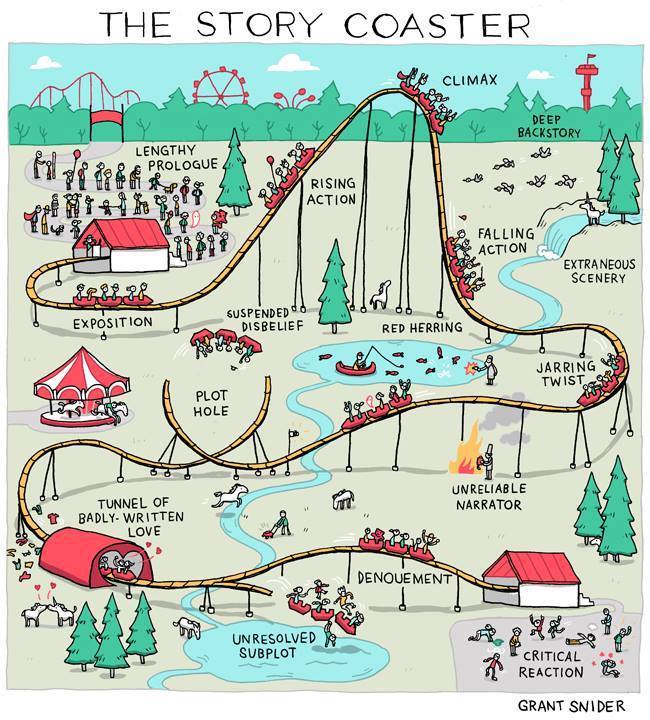
Sometimes writing is a giant roller coaster ride. (For the record, I hate roller coasters.)


Often times life gets in the way and absolutely no words get written for days, months, sometimes years.


This is pretty much me with every book I write:


Everyone has felt this at sometime in their career (more often than not, about every manuscript)


I wish with all my might that this was a real place. It would make it so much easier!!


Every writer is different with their process. Some write really fast first drafts but spend weeks and months, even years in the editing phase. Some plot every detail out with outlines and storyboards, sometimes even visiting the cities where they're setting their story so every detail is perfect and takes years in the making. Some spew forth words perfect on the first try and immediately land a six figure multi-book deal. (This is probably as mythical as Mr. Snuffeluffagus.)


But the point of this post (if there really is one besides just tossing around really awesome memes) is to say, do what works for you to get your story from your brain to the page. No one way is right. No way is wrong. If it works for you and makes beautiful words, do it. Sometimes it takes a while to find which way works. And that's okay, too. In the end, just never give up. If one way doesn't work, try a new one. Or invent your own. Spew forth all the words, my friends!


Monday, May 18, 2015

Furthering Your First Pages

by Charlotte Levine Gruber

Photo by Stephen Poff 

We all want the magic ingredient that keeps readers turning pages — whether the reader is a agent, an editor, or a fan, what holds their interest? 

As a writer I’ve gotten lots of advice how to begin, and how not to begin my story. 
  • Never have a prologue. 
  • Start with action. Or don't start with action—why should readers care if they don’t know the characters?
  • Don’t start with a character waking up, talking on the phone or getting an email. 
  • Put your main character on page one. 

Weeding through such conflicting advice is challenging, and ultimately, only you know what works best for your story. But lets face it. We have to start somewhere. 

Do you need a prologue? Most often, the answer is no. But in certain instances, a prologue can be an effective device.

A prologue can provide the story question right up front. It may relate to a scene near the end of the story, and the story itself then shows what led up to this moment. This enables you to introduce your characters in a more leisurely fashion, and your reader's experience with 'meeting' them will be enhanced by foreshadowing of what is to come. Marg McAlister has an excellent example of this type of prologue on her blog. 

A prologue can be used to introduce a certain character's viewpoint on one occasion only. The rest of the book may be told from just one other viewpoint, or from several different viewpoint characters that are in some way removed from the one you've used in the prologue. The prologue can bypass the danger of viewpoint violation. 

J.K. Rowling’s first book, Harry Potter and the Sorcerer’s Stone, is told in a close 3rd person POV (Harry’s), but her first chapter is quite different, told when Harry is a baby. This chapter switches between omniscient and 3rd person POVs. Rowling may have considered setting this information aside as a prologue because of those different voices and the ten-year lag between it and the next chapter, but she didn’t do it. The information contained in those first pages is critical, it helps to set the story up. Had it been a prologue (at 17 pages) what do you think would have happened to Harry Potter? 

My critique partner, Christina Dalcher,  wrote about the Prologue Problem on her blog this month. She has an impressive list of bestsellers that all have prologues. Another book I’ll add to her list is the Book Thief (Markus Zusak). And I’ll admit that I loved the book, but skipped the prologue.

As Christina points out, most agents and editors hate prologues. Our in house-agents concur and add that established authors have more craft under their belt and more clout with publishers. My recommendation do what works. Never say never. And don’t give anyone a reason to skip pages.

How do you like to start a book?