I really enjoyed Niki’s and Janet’s last blog posts. To me, critiques and reviews seem to be two sides of the same coin. As writers, we're part of the entertainment industry. Reviews may be professional book reviews, fan reviews, or word-of-mouth. And as Janet said, lots of reviews garner attention and bring more readers.
But critiques prior to publication are what make us better.
Therefore, as Niki so eloquently told us, a critique partner, should be held in very high regard.
I love my blog partners. They are critique partners, beta readers and hand holders. I find myself chatting with them on Facebook in the evening while my daughter watches her favorite TV shows. Writing this post, I had an epiphany. We watched two reality TV shows back to back. And guess what? I have two perfect examples fro you on how to deal with critiques and reviews.
Shark Tank is a reality TV show where aspiring entrepreneurs pitch the "sharks" (investors).
This is a perfect example of what NOT to do. But critique partners, agents, and editors don't get the luxury of opinionated writers going on national television. So take a moment to review Niki's Ten Critique Partner Commandments. Don't argue with recommendations--the sharks talking about the two women pitching? Just think, they could be your editors.
Cut Throat Kitchen was on next. In this show the Chefs are given a cooking challenge, in this case they had to make a French Dip sandwich. The other contestants are offered an opportunity to sabotage each other. The chef you'll see get booted off the show had to make his sandwich on a tandem bike.
These chefs don’t make excuses with the challenges they faced. They simply say, “Thank you, Chef.” The chef who judged was also polite. He couldn't bite through the sandwich, but his review?
"You cut the meat wrong."
My ultimate goal is to get my manuscript published and sell lots of books. Critiques and reviews are just part of the process. I'm sure at some point, I'll get a negative review. Everyone reads differently. But when that happens I'm going to look for this blog and try to remember, "thank you chef."
Today we're going to talk about how to give your favorite author a long, happy, and stress free life.
Okay, maybe not stress free, but it'll hopefully at least keep them writing more books.
I'll let you in on a little secret. Human beings are like sharks that smell chum. It's human nature to want to see what happened with that train wreck. Why do we have traffic jams? Because of rubber-neckers. We want to see what the fuss is all about.
Same thing with books. If a book has a ton of reviews, it's going to garner attention. It helps the author get noticed, hit lists, come up in search engines, etc. All of which are so very important for a new author to make their way in the vast book jungle.
Reviews not only give exposure and help with sales, but they also give that author support and encouragement to keep on writing. You may not realize it, but authors are human beings (Well most of us are, the jury's still out on Anne Rice, she may actually indeed be a vampire.) We have feelings, and often times you'll find us circling the drain of self-doubt. A review may just save an author from setting fire to his/her computer. A review may give them the encouragement needed to write that sequel. A review may even save their career.
Because, guess what? We get just as excited when we see a new review hit as you do fan-girling over the book!
That was pretty much me when I saw my very first review. It's a feeling unlike any other in this world when a perfect stranger picked your book out of the millions of books available and decided to take the time to write about it for the world to see. That means something huge. Reviews help bridge that gap between the reader and the author. Let me tell you, I can guarantee you even Anne Rice, or Jennifer Armentrout will never forget their first review. Or even their five-hundredth, if it made a fan squeal with delight those words left will stick with us.
If you think your words don't matter, think again. Every review matters. Every fan matters. Especially to us little guys out here just starting out in the world. We're like weebly toddlers, unsure as we take our first steps into the world. Even if it's one or two lines, it makes a difference to that author. It doesn't have to be a novel of gratitude and undying love (all of which are okay if you chose to do so). Just enough time to stop by and say, hey, I liked your words. Keep it up.
And now, in return...authors...I want to talk to you. Let's remember to keep ourselves in check.
1) You're going to get a craptastic 1 star review at one point in your career. Even the great authors out there have gotten 1 star reviews.
Watch this if you think I'm lying.
Go look up your favorite book on the planet. There was someone who gave it 1 star. It's a right of passage. Remember all those rejections from the query trenches so long ago before you had an actual book published? Yeah...channel that thick skin. Sometimes while riding the high of a 5 star review, you'll hit turbulence, and a 1 star will dive bomb you. Embrace it and move on. Do not be this person!
2) Also, try and not be this person as well.
It's really hard trying to get your name out there. It's really hard to do promo and drum up a readership when you're just starting out. But let your work speak for itself. Let friends, family, and your author network of support get the word out. And it's really hard not to try and remind folks to kindly leave a review when they're done reading. Because, let's face it...life gets busy, people get side-tracked like a dog seeing a squirrel. Book reviews often get forgotten about. But if you have to relentlessly hound your street team, family, friends, coworkers, FB friends, Twitter, etc to write a review, you're going to turn off your potential readership. I guarantee you.
I'm writing this blog post for you, on your behalf. Don't resort to groveling to try and get folks to do something. It will always have the opposite effect.
3) If someone does you a solid and actually gives you a review? THANK THEM, and leave it at that. Do not try and hunt them down and figure out why they didn't give you a 5 star review when they only gave you 4. Thank your lucky 4 stars they took the time to give you that.
ALL of publishing is subjective. If you haven't figured that out as an author, then perhaps you need to re-evaluate your career path. Not everyone's going to love your book baby as much as you do. Mainly because it doesn't play out in their mind like the movie did in your head when writing it. You can't please everyone all the time. So make sure you're writing the story for you. And if someone happens to interpret it the way you intended, celebrate!! If someone liked it, but doesn't want to marry your book boyfriend....do not try and change their mind or beg them to give you 5 stars instead of 4. It will only devalue yourself as an author if you have to beg, borrow or steal those 5 stars. If you don't want an honest review of your work, don't ask for reviews. Oh wait, you shouldn't be asking for them to begin with. Didn't we already cover that?
And, lastly.....Back to readers...Please don't be this person:
The power of the interwebs runs rampant. Some people feel the need to hide behind their screen names and make up for the time Santa refused to bring them that Cabbage Patch Doll when they were 7. Or disgruntled author can't handle success of fellow author. Or their cousin left them at the alter for the family goat. Whatever the reason people feel the need to lash out and tap into their inner douchecanoe....it happens. It happens a lot. People who didn't even read the book leave a 1 star review. People rate a book 1 star before it ever even comes out.
Just, please think about the author on the receiving end. That's all I ask. Because, as we've discussed....word of mouth is the most powerful tool you have as a reader. Use that power wisely.
So, in closing, here's a helpful check list to help out your favorite authors, or your soon to be favorite authors.
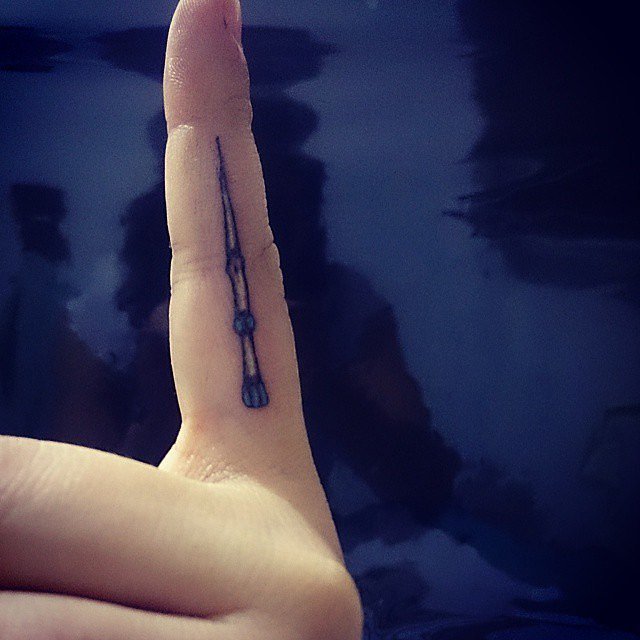
My husband said now that we have tats we're badasses (because nothing says badass like a tat that says "love").
Of course, tattoos aren't for everyone, though I have to say as a romance writer tatted heroes are kinda hot (you're welcome for not indulging in a spam of hot tattooed guy pix...unless you want that, in which case I can dedicate an entire blog post to it).
I've been considering getting inked for a while, and now that I've done it, there are several others I want to get. This is the next one:
homage to Farenheit 451
I love this because it's simple, but says so much. Symbolic of the fight against censorship, specifically of books and words, but in a larger sense of ideas and people, I see it as a literary equivalent of NoH8.
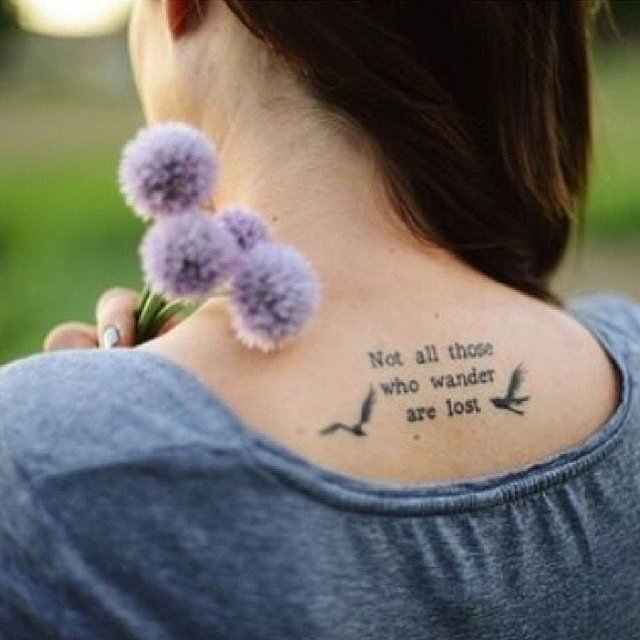
When I was researching the 451 tattoo, I came across a whole slew of others inspired by books and literature. As an author, it warmed my heart and gave me hope for humanity that people could be so inspired by words and stories as to put permanent reminders of them on their bodies.
Here are some of the most interesting:
Great Gatsby (I'm not a fan of the book, but this is an interesting tat)
Still I Rise, Maya Angelou
Fellowship of the Rings
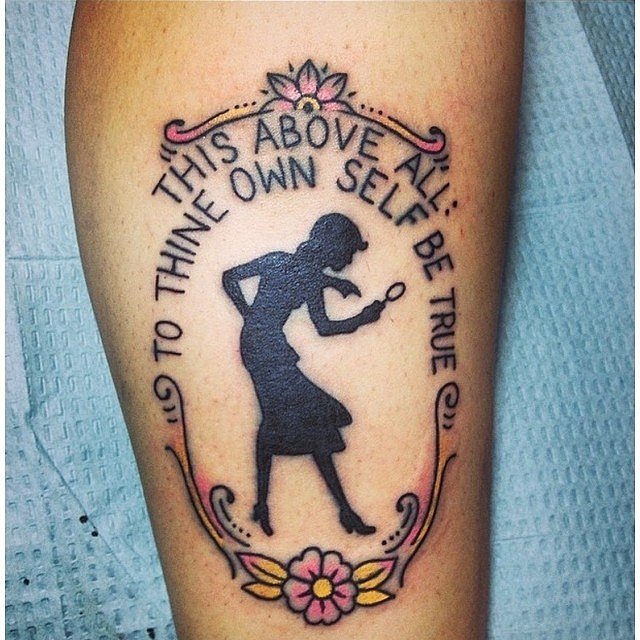
Cool combo of Hamlet and Nancy Drew
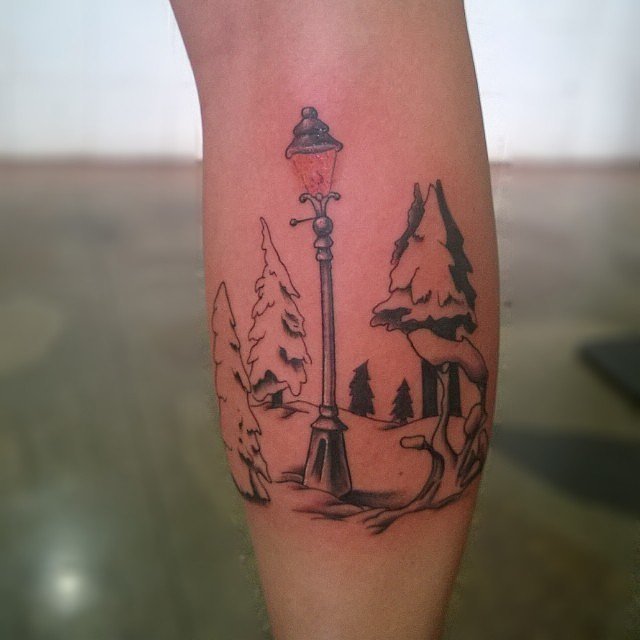
Chronicles of Narnia
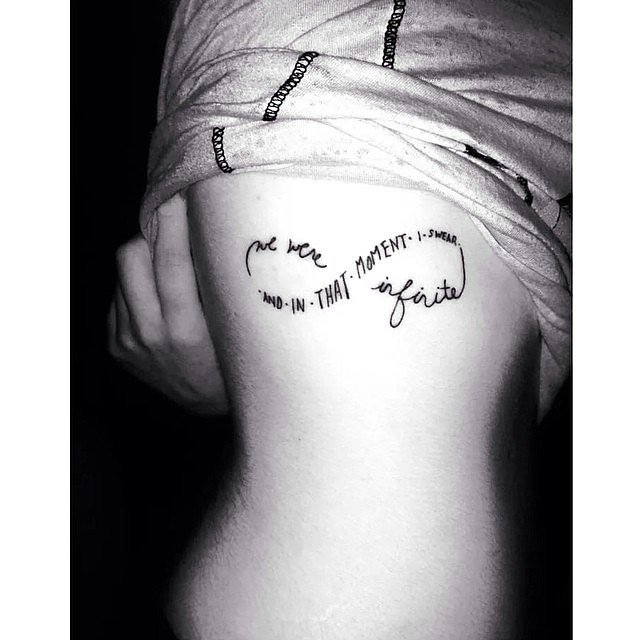
Perks of Being a Wallflower
I found a lot of Harry Potter ink, but this one is pretty cool
This is similarly simple and adorable
creepy...
From Ender's Game
Where the Wild Things Are
Slaughterhouse Five
Not really "literature" but still fun!
Of course, Hunger Games
From my fave series ever (The Dark Tower)...this one is tempting...
Anyway, you get the idea. There are as many literary tattoos as there are books and people who love them, which is pretty darn awesome. If you were to get literary ink, what would your choice be?
This last week I took part in #Nestpitch reading slush for the mentor of my team. The competition isn't over yet, but my part seems to have slowed down a bit. I thought about all the different pitches and first 300 words that I've read the last few days. There are so many interesting ideas out there! It got me wondering.
What influences your writing?
A lot of authors will tell you that various books inspired their writing style, or their type of genre, but I had to wonder. Is that the only thing that inspires authors? Good books? Of course you're told that in order to write, you need to read. I believe in that one hundred percent. I love books. I've been an avid reader from the moment I picked up a book at the school library. The very first book I got at the Scholastic book fair still sits on my book shelf. I find myself wanting to be as lyrically beautiful as JRR Tolkien when I read The Lord of the Rings, but there are many other aspects of life that influences my writing as well.
Now, I can't really speak for everyone else, but I can tell you a bit about myself.
Hi. My name is Niki. I'm an avid gamer, particularly games with strong story lines such as: The Legend of Zelda. Legend of Zelda, Ocarina of Time, was the first game I remember playing and beating one hundred percent on my own. It will forever be my favorite game of all time.
Kingdom Hearts. Another game that I adore. I loved revisiting all of the Disney worlds in the game.
Final Fantasy X. Sadly I have never finished this game, but the cut scenes were so beautiful that it will always be a favorite. I hope to replay it one of these days.
and Bioshock. There is so much about this game that I love from the 40's/50's feel to the unique bosses and weaponry.
I'm also a watcher of Japanese anime. Old school, since I used to watch it on Toonami on Cartoon Network when I got home from middle school. Some of my favorites include:
Sailor Moon. In middle school I had a friend that could draw anime and spent our free time in class drawing Sailor Moon pictures in everyone's notebooks. I loved the animation, I loved the female power, I loved the story lines.
Inyasha. Because, honestly, who doesn't want a dog demon following them around? And the cute thwap sound his ears made? Easily my favorite anime of all time.
and Gundam Wing. I adored Duo and the Death Scythe. The series ended before I could see the finale and Endless Waltz, but I will always love the concept of humans living in colonies in space and fighting with mobile suits.
I also love Gilmore Girls. I'd always hoped that when I grew up I would be Lorelai Gilmore and I'd have a daughter like Rory and we'd be surrounded by awesomeness.
and Charmed. I also hoped that one day I'd develop the ability to freeze time. I'm still waiting for that to happen.
All of these, along with Jurassic Park, Harry Potter and the Phantom of the Opera, have influenced my writing in one way or another. My Sleeping Beauty/Robin Hood retelling has a lot of Inuyasha's rooftop crossing. I saw it, I loved it, I wanted to write something similar to it. My YA Spec Fic has been compared to Frozen meets Pokemon. I don't really know much about the Frozen part of things, I wrote it before the movie came out, but I will admit I borrowed some of the concept from Pokemon. Here are the first few pages:
A fireball charged
at me, crackling and spitting as it grew in size. It sounded like a freight
train tornado, sucking air and whistling forward. Instincts took over and I
ducked, throwing my hands over my head. The crowd around me wasn’t bothered by
the fire as I peeked out at them from behind my fingers. Dressed in gray
t-shirts and blue gym shorts, some chuckled and chatted, others played with
their phones.
Ship, ship, ship. I’d spent so many years watching
my language around my younger siblings that “ship” became a natural reaction,
even in my head.
“It’s not real,
Evie. Stand up,” Takeshi, my student trainer, shouted. His accent went from the
calm British of my best friend to a thick, almost unrecognizable Japanese in
his agitation. He couldn’t cross over the lines of tape on the basketball court
without risking an automatic loss. Takeshi didn’t like to lose.
“Don’t baby her, Tak.” My opponent, Tawny,
sneered, hands waving in an intricate dance that I couldn’t emulate no matter
how hard I tried. It was times like these when I wasn’t sure if she was my best
friend or not.
The fireball
barreled into an inky black wolf the size of a horse as we argued. The audience
cheered. Energy from Tawny’s ball pushed my wolf into the wall where it yelped,
fur smoking. The bird in front of Tawny soared up to the ceiling and spread its
wings, giving a caw that shook the building. That it was a hawk of some sort,
the size of a pteranodon, wasn’t surprising. Tawny always picked birds.
Suzanne Collins said
that the idea for the Hunger Games came from mythology and Roman gladiators.
She also said that she'd been watching TV and switching back and forth between
a reality TV program where kids were competing for money, to a news channel where
kids were fighting in war and said the lines between the two sort of blurred.
Veronica Roth has said that
Psychology 101, "Sweet Sacrifice" by Evanescence, and splitting into
groups, drove her writing of Divergent.
Stephanie Meyer had a
dream that started Twilight.
Carrie, by Stephen King, was influenced by a discovery
while working as a janitor that girls' showers had curtains, an article on
poltergeists having telekinetic powers, and his memories of two girls at his
own school, both dead, who formed the character of Carrie White.
Influences come from everywhere, from the books we read to the TV shows and movies we watch to the games we play. They come from real life experiences we have ourselves, or things that we've heard others experiencing. Many people listen to music and have playlists for what they write. Other's surround themselves with pictures. Some turn to Pinterest to nail down their characters, storyboards and places they've never been before. Don't limit yourself. Draw from every aspect of life.
My granddaughter, Penny, turned seven months old yesterday. Each month, she works hard to master a new milestone. This month, it's crawling. Last month, it was sitting up.
Human babies are fairly amazing. At birth, they can't even support their own head. And one year later, they're walking, talking, and [sometimes] even following directions. Developing babies follow a sequential pattern; from head to toe.
My youngest daughter got down on her hands and knees to "show" Penny how to crawl. Realistically though, her neuromuscular coordination is just not quite ready. Watching this attempt made me think about writing; writers often compare their book to a baby. After all, a lot of blood, sweat, and tears go into the creation of your book.
Earlier this weekend, I critiqued a few chapters for a new writer in my group. She made some of the same mistakes I made last year—so close, in fact, I just copied and pasted a critique I’d gotten.
Creative writing might not have the delineated sequence of a developing child, but researching for this post, I did come across many common mistakes new authors experience in the first year:
1) SUBMITTING TOO SOON
You finish your manuscript. Your mother and sister both loved it. You begin submitting. It’ll take the agents a while to get to it anyway right? While it’s in Ms Wonderful Agent’s inbox, I’ll just keep working on it.
Jessica Faust, from BookEnds Literary said in a blog post:
The first thing I'm going to say is that revising material that's already out on submission just shouldn't happen. Why? Because, once you decide a book is ready to go you've more or less put it away and started work on your next book. The first book is dead to you as far as revisions are concerned.
My advice? Finish your MSS, and then revise until you can’t stand to look at it anymore.
2) STARTING IN THE WRONG PLACE
Start where the change takes place for your protagonist. In an email exchange with Janet Reid, she cut to the root of my opening in one fell swoop.
aha!
One of the problems in mss I see consistently is not starting
at the right place.
Chop those 47 pages and get to the good stuff.
Go! go! Go!
Janet
3) CONFLICT
Some writers shy away from conflict, even with imaginary people. But conflict is one of the primary elements of fiction. Your main character should face conflict, and should instigate conflict.
Add conflict to dialogue. Friction is interesting. Look for ways to set your main character at odds with others, whether that means a simple difference of opinion or a major difference in philosophy. Make sure there is some kind of conflict in every scene.
*But most important is to increase the level of conflict as the story advances.*
4) PACING
The pace should vary throughout your MSS, but escalate toward the climax. The failure to pick up the pace and/or push the emotional stakes as the story peaks is a cause for readers to stop reading.
By the sixty to seventy percent mark, your reader should anticipate the ending. If they don’t feel that something’s about to break open, you haven’t upped the pace and begun to push the emotions.The reader should feel the difference as the story heads toward the showdown. Speed the pace by writing shorter chapters, paragraphs and sentences. Put more white space on a page.
5) FLAT WRITING
Flat writing is a sign that you’ve lost interest. And if you’ve lost interest, your reader will too. When reading your own work, if you catch yourself skimming, it’s a sign of flat writing. Beef it up with tension. See #4
7) SHOW, DON’T TELL
The difference between telling and showing usually boils down to the physical senses. Visual, aural, aromatic words take us out of our skin and place us in the scene you’ve created. Giving senses to your characters will bring them to life for your readers.
Shilpi Somaya Gowda has a perfect example of showing in the first paragraph of her novel SECRET DAUGHTER
5) PHONY DIALOGUE & AWKWARD PHRASING
Be wary of using dialogue to advance the plot. Readers can tell when characters talk about things they already know, or when the speakers appear to be having a conversation for reader benefit. You never want one character to imply or say to the other, “Tell me again, Bob: What are we doing next?”
“Mrs. Smith’s face pinkened slightly.” This is an author trying too hard. Awkward phrasing makes the reader stop in the midst of reading and ponder the meaning of a word or phrase. You never want this as an author. A rule of thumb – always give your work a little marinating time before you come back to it. See Rule #1 When your return to it with fresh eyes the awkwardness will scream at you. I promise.
From our own Margaret Bail:
Your manuscript isn't as smooth as it could be. A couple of notes: First, the characters address each other by their names way too much. People just don't do that. We don't say, "Hi Bob, what's up?" "Nothing, Suzy, how are you." "I'm good, Bob, except I have a headache." "I'm sorry, Suzy. Maybe you should take an aspirin." "But I'm allergic to aspirin, Bob." You see what I mean?
6) THE “TO BE” WORDS
Once you've been dinged for the frequent use of the “to be” words – am, is, are, was, were, be, being, been, and others – you’ll be appalled at how many you find. “To be” words flatten prose and slow your pace to a crawl. My personal favorite? ”was verbing." Ie was stalling, was crying. It's much stronger to say, stalled or cried. Weeding that from my MSS was a @$! When in doubt, replace them with active, vivid, engaging verbs to muscle your prose.
7) REPEATS
Just about every writer has "pet” words. Hunt them down. Agents, editors and readers will notice them.
In Scrivener, on your toolbar,
—>Project
—>Text Statistics
—>hit the drop down arrow next to word frequency
8) -LY ADVERBS
Many people are opposed and they don’t add anything. Eliminate.When I think of adverbs, I have a mental picture of Vizzini from PRINCESS BRIDE.
How many adverbs are in the scene from this classic movie?
Your book baby has a lot of moving parts to coordinate just like a developing human baby. Make sure your child is ready for the bus. Sometimes, we writers might need a trusted friend to catch us when we fall. Keep your chin up, call your friend, and be sure to reciprocate. Like Niki Cluff said, your CP will need a boost sometime too.
I have spent my days within my own mind, capturing the essence of worlds I can't live without.
I have written all the words, spent my time paring them down to perfection until the world glitters like a million stars and the characters shine in their brilliance. I have walked up hill, both ways, in the snow, without shoes.
I am the tiger.
Hear me roar.
WRONG!
We've talked about this before, but I want to reiterate. Being an author doesn't mean being alone. There are people out there who care just as much about your rough drafts as you do. When you're starting out, there are critique partners and beta readers. As you progress there are agents and editors, until finally there are readers who will adore the book as much as you did when you were writing it.
For today's post, I want to focus on critique partnering, and here's why: critique partners are one of the most important parts of writing.
When I started, I joined a local writer's group. They were older people and none of them were terribly interested in YA, but they accepted me since we live in a small area and there weren't many places for me to go to get the support that I needed if I was going to turn this into a career. For those of you who don't know me on a personal level, I'm very shy. I don't talk much unless I'm familiar with you and comfortable. It stems from fifth grade when the group of friends I hung out with chose the new girl over me, deciding that I wasn't cool enough. There were harsh words said, back stabbing as people pretended to be my friend and then bullied me, and many shed tears as I pleaded with my mother not to send me back to school with those awful people.
I am closely guarded and struggle to let people in. It made me a loner during my high school years and the only reason I had friends is because my band director basically told me to try out for drum major as a freshman or I would fail band. When I entered the writer's group, I knew that there would be critiques, but I also had the impression that they would be helpful.
I was not prepared for what I received.
My very first critique was awful. The woman questioned why I started writing in the first place. She informed me that I was at a grade school level with my writing and would never be anything more than an amateur. She tore apart every single line of my very first manuscript then laughed about it at the next meeting.
I quit writing. For several years I kept a journal of ideas, but did nothing with them. It took my husband, a local LDS writer, Kerry Blair, who has known me since I was fourteen and my grandma to coax me back out of my shell and back into the world. I also had to learn that I didn't care what others thought and that not everyone would be as harmful as this particular woman had been.
I came across a post from a friend, recently, complaining about receiving a similar critique and how she never wanted to write again. I let out a deep sigh. Why would someone do something so harmful to someone else's dream?
Critique partners are meant to be helpful. They are supposed to give us direction and point out the things that we can't see ourselves. Sometimes they help us bounce ideas. They may even become friends that we care deeply about and root for just as much as they root for us. So, I have prepared my 10 Commandments for Critique Partnering for both critiquers and critiquee's.
1.) Thou art not God's gift to writing.
There is nothing more irritating than arrogance. When someone sends you their critique, it's because there are things they can't see because they are too close to the story. It doesn't mean they want you to act superior and tell them how stupid they are. You are there to support them and help them grow. Offer them helpful advice. At the same time, critiquee's, don't expect your cp to know everything there is to know about writing. They're going to miss stuff. They're human.
2.) Thou shalt not steal they partner's work.
Being a critique partner is a great privilege. This author is trusting you with their baby, trusting that you won't abuse that relationship and trusting that you won't leak their precious words out to the world. I once read that Stephenie Meyer had another version of Twilight written from Edward's perspective, but that someone leaked it and now she'll never release it. And while this may be the end of the world for some people, it reiterates my point. Don't do this to your author friends people. It's just not nice.
3.) Thou shalt tell others as thou would have told to them.
This works two fold. 1. If you ask someone to critique for you, expect to give them a critique back. It's common courtesy. We all live in the sandbox. Play nicely. 2. Don't be mean. Critiques are meant to offer helpful feedback, to praise when necessary and to offer advice when necessary. Question your partners on how they handle their critiques. Make sure they know how you critique, what you look for and what to expect. Keep an open line of communication.
4.) Thou art not the author of thy critique partners work.
You've been there. You were there when the idea was born. You spent hours babysitting and bouncing ideas. You watched it crawl, then walk and finally run. You were there when it was a monster and there when perfection flowed. That doesn't give you the write to turn it into your work. Don't try to turn the voice into your own. Don't add ideas that aren't necessary. You may have been there as a shoulder to lean on, but you aren't the author.
5.) Thou shalt give an appropriate time frame and stick to it.
I am guilty of this one, and recently. I had my own edits from my agent, and then #Nestpitch popped up, which I'd forgotten about, the Rosemary Contest for YARWA and then a couple of critiques. One got pushed by the wayside. Try not to do this. When someone asks you to give them a critique, give them a time frame of when you expect to be done. Life happens, and sometimes you can't stick to the frame. It's cool. Just let the other person know. Critiquee's, ask for a time frame when you send your work. Again, communication is key.
6.) Thou shalt not overextend thyself.
Do you really need more than one critique partner? Yes. Like, a zillion times yes. I've heard that if at least three people are noticing the same problem, it's time to fix it. Does that mean you need to partner with every person you meet and every person who asks? No. Know your limits. Don't take on so many cp's that you're knee deep in crits without the ability to see the light of day and you can't get back to your own work. Find a number that works for you and stick to it.
7.) Thou shalt not be negative all the time.
Does the manuscript need work? Of course. They always do when they go to a cp. That's why they're with a cp. Does that mean that everything you point out needs to be a flaw? Nope. Point out what's great along with what needs work. It's easy to tear people down. It's harder to build people up. Try to balance both.
8.) Thou shalt remember thy manners.
Take your critique with a little bit of grace and humility. Thank your partner for taking their time. Tell them you appreciate what they've said. Do you have to agree with all of it? Of course not. A lot of it is just personal opinion and you may not agree with what they've said. Most cp's just want to help in the only ways they know how. Be grateful they took the time to do it.
9.) Thou shalt keep an open mind.
Again, everything your cp says is their opinion and you don't have to keep anything you don't want too, but you did ask them for a reason. Look for trends between cp's and betas. If they're noting similar things, then they are something to look out for. Keep in mind who is reading for you. Someone writing in the genre you write in is probably going to hold more weight than someone in an unfamiliar genre. Don't go into your critique thinking you're awful and taking everything said as a personal hit.
10.) Thou shalt back up thy work and grow as a writer.
So you've decided to take everything that was said to heart and do a complete rewrite. That's your choice, but make sure to back up the original. You may start writing and hate the rewrite and want to go back to the original. It isn't going anywhere while you rewrite and it may be something you'll need to look back on as you write. Take the advice and grow. Do the research, learn the writing rules you're struggling with. Don't expect your cp to point out every flaw. Read books on craft. Work on improving yourself and your knowledge.
Remember, wolves often travel in packs. Some of your critique partners may become friends, even best friends. One of my critiques partners has become basically a sister to me, and she acknowledged me in the dedication of her book, The Snow Rose Series: Unbearable. Don't expect all to be. Sometimes you need critiques from people who aren't invested in your writing like a best friend. Other times you need someone to pull you off the ledge when you feel like your writing will never get past critiquing. Whatever you do, treat your cp's and beta's the same way you'd like to be treated yourself. Grace and humility go a long way.
Have any advice on cp etiquette? Leave it in the comments below.