Showing posts with label authors. Show all posts

Friday, October 9, 2015

Self-Publishing Journey Part II


The last time I was here, in early August, I talked about deciding between traditional publishing (including Big-5 houses and mid- and smaller-sized houses) and self-publishing.
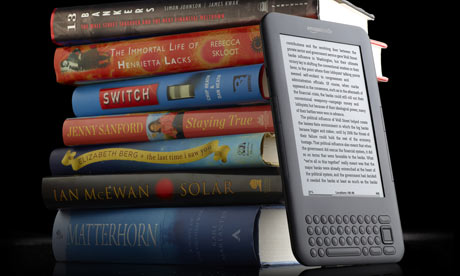


I talked a lot about what you need to consider if you choose to self-publish, like acquiring a good editor, finding reliable beta readers, marketing, marketing, marketing.

You may remember that I mentioned my co-author, Merissa, and I had decided to self-publish book one of our MMA-based romance series. Here we are in October, and we're well on our way to realizing that goal.

In the meantime, though, I also decided I wanted to write a series of novellas and self-publish those. It started as kind of a frustrated tantrum that some tropes seem to sell better than others, so I wanted to experiment and see if I could do well with a series if I followed tropes.

Hence, the Caine Brothers series was born. It's a series of erotic romance novellas about six alpha brothers (a billionaire, a biker, a SEAL, a fighter, a rocker, and a shifter...and one of them will have a stepbrother/stepsister romance). Yes, it may seem cliche, but I'm putting my own twist on all the stories, and really, it's an experiment in self-publishing. Can I create something that will sell by chasing the trends?

So between the two projects, I've been hard at work learning the ropes of self-publishing. Thankfully, I'm involved in several Facebook author groups where some of the authors are also self-published, and many of them have been very generous about schooling the newbie.

From here on out, when I say "I" I mean both I and we. I did all the work on the novella, but Merissa and I have worked together on the novel.

Because I'm an English teacher with a masters in writing, I felt relatively qualified to edit my own work. This was an advantage because it saved me time and money by not having to pay for a professional editor.  Once the drafts (of the first novella and the MMA book) were done, I edited them then sent them out to beta readers.

Having reliable beta readers who are also authors, or long-time readers with some advanced skill in understanding story structure and/or mechanics, is extremely important because they can help you find holes in your plot or characters, which you can then go back and fix.

Once I was sure the manuscripts were clean and ready to go, I had to attack the hard work of figuring out what came next.


It turns out, you can't do anything else until you have a cover, so cover art was the next step. For the co-authored novel, we chose to have an artist do the cover. We love the artist and the results, but it wasn't cheap. You pay for quality, which we were willing to do. For the novella, I felt reasonably capable of creating my own cover, which I did. However, I know my own limits, so I kept it simple and clean.  


With covers completed, the next step was formatting. I found a formatter in one of the Facebook book groups, called her and chatted. I'd read some of the books she'd worked on, and after talking to her and interacting with her online, I liked her so I chose to use her. She did a fabulous job on the novella, so we'll be using her for the novel as well.

The next thing I needed to figure out was how to get the book uploaded to the different digital media sites. I talked to other self-published authors and learned about KDP and Draft2Digital. The novella will only be digital, and although the novel will also be in print form, I haven't done the work/research on print yet. That's another step.

Since the novella will release October 19, I'm currently deep into figuring out how to let readers know it's there for them. I'll be hosting a Facebook release party, I've been posting in every book group I can find, and found a lot of reviewers in response to some of those posts. Some of those reviewers were excited enough about the book that they wanted to join a fan group, which I set up on Facebook, also.

I'm not going to pay for a publicity company to do a formal blog tour or other marketing for the novella, but we will do that for the novel. We're still shopping/researching on that front.

So far, everything seems to be moving along nicely. Of course, I won't be able to draw any conclusions until either of the books release and we see how they do.

What have I learned so far?

Self-publishing is a lot of work. There's a lot to learn. I haven't written any new words for a while since I've been so busy learning. However, the learning should be a curve with a steep incline at the beginning and a smoother plateau (or at least a very reduced incline) from there. Once I know what I need to know, I won't have to spend that time learning it again.

My hunch is that the hardest part of the whole deal will be hawking the books--finding readers, establishing a fan base, getting the word out. Once I/we crack that nut, hopefully things will be easier.


The next time I'm back, I'll be able to report on releasing a self-published book and what I've learned about marketing. I might feel completely differently on the other side of that effort, so stay tuned to see what happens!

~Margaret


Friday, July 31, 2015

Books Vs. Movies

A couple weeks ago a debate sprung up between me and a few of my friends. Which is better, books or movies? We live in a day and age when books and movies are accessible with the touch of a button. Where, in a few minutes, you can have any book or movie you'd like at your fingertips. That brought up a serious problem with a few of my friends. Most only read books when they were too excited to wait for the movie. Only a few read the books for pure enjoyment and because the books offered much more than the movies. With the advancements in technology, that line seems to be more of a blur than ever before.

In an effort to combat the book-lovers opinions of which is better, the movie-goers insisted that movies are easier to understand. It brings the books to life in a very real way giving characters an actual voice and face, gives the setting a perspective that the imagination can't quite come up with on it's own. I will admit that I have a very active imagination, but the world of Harry Potter was so much more intriguing in the movie than in my own mind.

Another point they insisted on was that books are anti-social. It doesn't require a group of people to read a book. It's a solitary activity, while a movie can be enjoyed in groups or for dates. I happen to disagree with this opinion. I enjoy movies alone. I don't want to talk during a movie, or be talked at during a movie because I rarely answer. It bothers me when people are constantly up and down to go to the restroom or restock popcorn because they've annihilated the jumbo bucket. I saw Jurassic World on my own, without children, and it was a freeing experience. I saw the complete movie from start to finish. I haven't been able to do that in years.

The last point they insisted on was the lack of action in books. There are no fiery explosions or tragic drownings. A pit of snakes is not as intimidating, raptors aren't as ferocious and the swords fights are not nearly as edge of your seat. It's tough to write fight scenes or other action. Movies flow with the action, giving your mind a visual to understand.

In the defense of books I must say that I enjoy writing a fight scene, I like the flow of my words on the page, like a dance of back and forth blows. Is it harder to do than actually acting it out? Of course, but in the end the sequence feels more satisfying.

While books may require more imagination than a movie, they have a level of depth that movies can't. You can't get inside the characters head in movies or hear their thoughts. Emotions are more involved and deeper in a book. In my opinion, more tears are shed, more laughs are shared and I cling to the characters in novels for much longer than I do those in movies. In books you're able to attach. Their emotions are not rushed for the space of time that a movie allows.

Movies often lose parts of books. There is only so much that can be added to fill the space of two hours, and sometimes things have to be cut. It's a sad truth and sometimes it leaves out the reason that a character is loved, or an important plot point or even a character that may not feel that important to the movie, but makes an impact in the plot of the book. I'll never forget the first time I watched Harry Potter and the Goblet of Fire. It wasn't my favorite book by any means, but I found the trials fascinating and when they left out aspects of the books I was confused and devastated. I'd imagined what this world would look like and I felt like they'd cut the world in half somehow.

There are pros and cons to both books and movies, and I will admit that I love to see a book come to life on the big screen. But I also go in knowing that things may not always follow the book closely, that parts will be left out. Sometimes I read the book before hand, sometimes I read it after. Whichever you choose, give both your best shot, don't get mad at the author for things that get changed in movies because they'd don't control it and just enjoy the different experiences, because that's what they are. A different way to experience the same story.

So, do movies do books justice? Do you always read the book first? Tell me in the comments below!

Friday, April 3, 2015

10 Critique Partner Commandments, or Bestest CP EVER!

I am a lone wolf.
I am solitary.
I have spent my days within my own mind, capturing the essence of worlds I can't live without.
I have written all the words, spent my time paring them down to perfection until the world glitters like a million stars and the characters shine in their brilliance. I have walked up hill, both ways, in the snow, without shoes.
I am the tiger.
Hear me roar.

WRONG!

We've talked about this before, but I want to reiterate. Being an author doesn't mean being alone. There are people out there who care just as much about your rough drafts as you do. When you're starting out, there are critique partners and beta readers. As you progress there are agents and editors, until finally there are readers who will adore the book as much as you did when you were writing it.

For today's post, I want to focus on critique partnering, and here's why: critique partners are one of the most important parts of writing.

When I started, I joined a local writer's group. They were older people and none of them were terribly interested in YA, but they accepted me since we live in a small area and there weren't many places for me to go to get the support that I needed if I was going to turn this into a career. For those of you who don't know me on a personal level, I'm very shy. I don't talk much unless I'm familiar with you and comfortable. It stems from fifth grade when the group of friends I hung out with chose the new girl over me, deciding that I wasn't cool enough. There were harsh words said, back stabbing as people pretended to be my friend and then bullied me, and many shed tears as I pleaded with my mother not to send me back to school with those awful people. 

I am closely guarded and struggle to let people in. It made me a loner during my high school years and the only reason I had friends is because my band director basically told me to try out for drum major as a freshman or I would fail band. When I entered the writer's group, I knew that there would be critiques, but I also had the impression that they would be helpful.

I was not prepared for what I received. 

My very first critique was awful. The woman questioned why I started writing in the first place. She informed me that I was at a grade school level with my writing and would never be anything more than an amateur. She tore apart every single line of my very first manuscript then laughed about it at the next meeting.

I quit writing. For several years I kept a journal of ideas, but did nothing with them. It took my husband, a local LDS writer, Kerry Blair, who has known me since I was fourteen and my grandma to coax me back out of my shell and back into the world. I also had to learn that I didn't care what others thought and that not everyone would be as harmful  as this particular woman had been.

I came across a post from a friend, recently, complaining about receiving a similar critique and how she never wanted to write again. I let out a deep sigh. Why would someone do something so harmful to someone else's dream? 

Critique partners are meant to be helpful. They are supposed to give us direction and point out the things that we can't see ourselves. Sometimes they help us bounce ideas. They may even become friends that we care deeply about and root for just as much as they root for us. So, I have prepared my 10 Commandments for Critique Partnering for both critiquers and critiquee's.


1.) Thou art not God's gift to writing.


There is nothing more irritating than arrogance. When someone sends you their critique, it's because there are things they can't see because they are too close to the story. It doesn't mean they want you to act superior and tell them how stupid they are. You are there to support them and help them grow. Offer them helpful advice. At the same time, critiquee's, don't expect your cp to know everything there is to know about writing. They're going to miss stuff. They're human.

2.) Thou shalt not steal they partner's work.
Being a critique partner is a great privilege. This author is trusting you with their baby, trusting that you won't abuse that relationship and trusting that you won't leak their precious words out to the world. I once read that Stephenie Meyer had another version of Twilight written from Edward's perspective, but that someone leaked it and now she'll never release it. And while this may be the end of the world for some people, it reiterates my point. Don't do this to your author friends people. It's just not nice.

3.) Thou shalt tell others as thou would have told to them.
This works two fold. 1. If you ask someone to critique for you, expect to give them a critique back. It's common courtesy. We all live in the sandbox. Play nicely. 2. Don't be mean. Critiques are meant to offer helpful feedback, to praise when necessary and to offer advice when necessary. Question your partners on how they handle their critiques. Make sure they know how you critique, what you look for and what to expect. Keep an open line of communication. 

4.) Thou art not the author of thy critique partners work.
You've been there. You were there when the idea was born. You spent hours babysitting and bouncing ideas. You watched it crawl, then walk and finally run. You were there when it was a monster and there when perfection flowed. That doesn't give you the write to turn it into your work. Don't try to turn the voice into your own. Don't add ideas that aren't necessary. You may have been there as a shoulder to lean on, but you aren't the author.

5.) Thou shalt give an appropriate time frame and stick to it.
I am guilty of this one, and recently. I had my own edits from my agent, and then #Nestpitch popped up, which I'd forgotten about, the Rosemary Contest for YARWA and then a couple of critiques. One got pushed by the wayside. Try not to do this. When someone asks you to give them a critique, give them a time frame of when you expect to be done. Life happens, and sometimes you can't stick to the frame. It's cool. Just let the other person know. Critiquee's, ask for a time frame when you send your work. Again, communication is key.

6.) Thou shalt not overextend thyself.
Do you really need more than one critique partner? Yes. Like, a zillion times yes. I've heard that if at least three people are noticing the same problem, it's time to fix it. Does that mean you need to partner with every person you meet and every person who asks? No. Know your limits. Don't take on so many cp's that you're knee deep in crits without the ability to see the light of day and you can't get back to your own work. Find a number that works for you and stick to it.

7.) Thou shalt not be negative all the time.
Does the manuscript need work? Of course. They always do when they go to a cp. That's why they're with a cp. Does that mean that everything you point out needs to be a flaw? Nope. Point out what's great along with what needs work. It's easy to tear people down. It's harder to build people up. Try to balance both.

8.) Thou shalt remember thy manners.
Take your critique with a little bit of grace and humility. Thank your partner for taking their time. Tell them you appreciate what they've said. Do you have to agree with all of it? Of course not. A lot of it is just personal opinion and you may not agree with what they've said. Most cp's just want to help in the only ways they know how. Be grateful they took the time to do it.

9.) Thou shalt keep an open mind.
Again, everything your cp says is their opinion and you don't have to keep anything you don't want too, but you did ask them for a reason. Look for trends between cp's and betas. If they're noting similar things, then they are something to look out for. Keep in mind who is reading for you. Someone writing in the genre you write in is probably going to hold more weight than someone in an unfamiliar genre. Don't go into your critique thinking you're awful and taking everything said as a personal hit. 

10.) Thou shalt back up thy work and grow as a writer.
So you've decided to take everything that was said to heart and do a complete rewrite. That's your choice, but make sure to back up the original. You may start writing and hate the rewrite and want to go back to the original. It isn't going anywhere while you rewrite and it may be something you'll need to look back on as you write. Take the advice and grow. Do the research, learn the writing rules you're struggling with. Don't expect your cp to point out every flaw. Read books on craft. Work on improving yourself and your knowledge.


Remember, wolves often travel in packs. Some of your critique partners may become friends, even best friends. One of my critiques partners has become basically a sister to me, and she acknowledged me in the dedication of her book, The Snow Rose Series: Unbearable. Don't expect all to be. Sometimes you need critiques from people who aren't invested in your writing like a best friend. Other times you need someone to pull you off the ledge when you feel like your writing will never get past critiquing. Whatever you do, treat your cp's and beta's the same way you'd like to be treated yourself. Grace and humility go a long way.

Have any advice on cp etiquette? Leave it in the comments below.


Monday, March 23, 2015

How to Rock your Cover Reveal


Are you looking for a tried-and-true, fail-safe, how to guide for planning a cover reveal? Read on for my awesome, enlightened eight step approach to Rocking your Cover Reveal ...

Recently, I had the opportunity to reveal the cover of my debut historical fiction, Avelynn. As a good little author, I wanted to shout my cover to the mountaintops; I wanted the whole world to share in my joy and pride. But one cannot simply post the picture and say here it is. We must do it up to the nines—and rightly so. This is a big deal in the life of an author. A momentous occasion, a milestone of sorts.
However, to others, it’s merely another cover reveal in the onslaught of cover reveals on the internet. It’s just another image, another self-promo tactic in a sea of authors yelling, ‘Hey, over here, look at me, see what I’ve written, isn’t it awesome!’ But here’s the kicker—my book is awesome! ;) I want you to see what I’ve written! I want you to love the cover and the words painstakingly rendered on each of the three hundred odd pages as much as I do. I just need to help you filter the cacophony out there until you notice me.

The book :D

Lisa Abellera wrote a great blog post about the importance of a book’s cover. And continuing on a theme first introduced by Charlotte Gruber in her latest post on characters, judging a book by its cover is akin to going on a first date.
 
We might claim that we’re not superficial, but deep down, under the surface of our altruism and genuine desire to be nonjudgmental, we’re all deeply influenced by what we see. A perfectly  symmetrical face is considered the most attractive to our wandering eyes, and like our first impressions of another person, our first impressions of a book are often determined by the design elements on its cover. It has to be captivating, intriguing, and aesthetically pleasing. In those first moments, within that suspended breath, we should be able to catch a glimpse of what we will find inside.
 
Off course, yet veering into a slightly relevant tangent:
 
I love my husband. We’ve been together twenty-four years. I fell in love with his personality, his sense of humour, and his genuine and selfless character, but I have to admit, when I saw him walk through the doors of that submarine shop all those years ago, I first noticed his handsome face—taking in his gentle blue eyes, the outside edges crinkling slightly when he smiled, his high cheekbones, his perfectly coiffed blond hair, strong jaw line—and his tight little soccer-playing ass. In fact, many years later at one of those soccer games, he jumped to head the ball just as the goalie lunged to fist it away. Both missed the ball but made contact with each other—husband’s face/goalie’s knuckles. When I saw him the next day, all puffy and rocking a technicolour eye, which I might add was swollen shut, I told him point blank: “I never realized how superficial I was until just this moment.” ;)
 
The husband :D

Isn’t he cute! But I digress. So, back to the cover reveal. I wanted to make a good first impression, but I wanted it to be meaningful. So what to do? Google it, of course. I scoured the internet looking for information on how to reveal a book cover. The pickings were abysmal at best. I hunted, scrolling through over ten pages of google search results for anything I could find. I stumbled onto a lot of individual author websites and blogs that highlighted their cover—one image, a few words of buildup, maybe an excerpt or two, but that was it. Nowhere could I find a tried-and-true, fail-safe, how to guide. So, after pouring though several sites, I improvised. I combined a few ideas, came up with a couple of my own, and here’s what I garnered:

 
How to Rock your Cover Reveal


1. Plan it
 

Pick the date
  • I chose the handy six month pre-publication date to reveal the cover.
  • I.e., the book is coming out September 8th, 2015, so I held the party on March 8th.
Set the time

  • I wanted this to be a big event with the option for people to pop in throughout the day.
  • My party ran from 12:00pm EST to 8:00pm EST.
  • Plan on being glued to your computer from at least an hour before to an hour after.

2. Facebook it


Set up a Facebook event
  • Setting up a Facebook event is effortless, and it’s easy to invite everyone on your friend list to the party!
  • Since it all takes place on Facebook, you can host the event in your pyjamas.
  • Your friends can also attend in the PJs.
Caution: Not everyone knows what a Facebook event is! As the awesome organizer of this spectacular soiree, it’s very important to make it clear to your invitees that the event takes place ON Facebook, not AT your house. Take it from me … this little distinction is key.  


3. Guest Authors
 

A party is always better with friends
  • If you’re a writer, you probably have lots of author friends who might like to find and meet potential new readers.
  • Dog-earing an hour at the start of the event to set the atmosphere (e.g., describe contests, giveaway rules, reveal guest author line-up) and an hour to close the festivities (e.g., finally … Avelynn’s big cover reveal), I offered each of my guest authors a full hour to interact and have fun with our guests.
Tell your friends what you are doing to build up the event
  • One week prior to the event, I revealed a tiny piece of the cover with a word hidden within the image.
  • Every day thereafter, leading up to the event, I would post another puzzle piece.
  • Readers were told to jot down the hidden words and bring the list to the party. If they got them all correct, they were entered in a draw for a chance to win a $50 Amazon gift card.
  • Pimp out the event on all your social media pages and outlets. Talk it up, blast it out there! Create some noise.
Be clear up front about expectations
  • Yes, it’s your cover reveal, but this party is actually more about your guest authors. After all, you don’t even have a book out yet.
  • Ask them to invite friends from their personal Facebook pages.
    • This is very important. Only a small percentage of those invited will actually attend, so the more invites the better it is for everyone involved!
  • Ask that they post their ‘special guest appearance’ on their blog at least twice leading up to the event and tweet with abandon.

 4. Giveaways


Make it worth the reader’s while to give you their valuable time
  • For each correct answer to the hidden word puzzle challenge, a reader received an entry into the draw for the $50 Amazon gift card.
Scavenger Hunt
  • Building an author newsletter list is essential.
  • Building a presence on Goodreads is essential.
  • Having readers ‘like’ your author page is awesome too!
  • So, I sent my readers on a scavenger hunt, so to speak. For each ‘action’ completed from the list above (i.e., going to my website and signing up for my newsletter, hopping over to Goodreads and voting for Avelynn in Listopia and adding the book to their ‘to read list,’ liking my author page) they received an additional entry into the $50 Amazon gift card draw.
  • Win/Win. :D

5. Author Giveaways


Each of my guest authors offered a giveaway of their own
  • Whether it was an ebook, a print book, a pdf, or a gift card, each guest author brought a giveaway to the party … so that meant FREE stuff every hour!
  • At the beginning of every hour, I would introduce a new guest author in a new post. In the comments, under that specific thread, for that specific author, readers would post questions and generally interact with my guests.
  • For each comment, a reader received an entry into the draw for that hour’s prize giveaway.
  • Every comment garnered an entry, ergo, the more you commented and had fun, the more chances you had to win!
 
6. Facilitate


Keep the conversation going
  • Have a list of author interview questions handy.
  • There are lots of great examples of author interview questions on the internet. I strove for a balance of serious and silly and launched at whim.
  • Your job is to introduce your guest authors and start the dialogue rolling, periodically offering up new questions if a current thread tapers off.
Once I started the conversation, readers took over, asking their own questions. Once that happened, I could sit back and drink my coffee (or finally run to the bathroom … damn coffee). I had only to keep an eye on the time and make a few witty comments of my own.


 7. Organize


Prior to the event:
  • Collect all the bios, images, and links your wonderful guest authors will provide.
  • Copy the text into a specific file folder, e.g., Cover Reveal Party Author Deets.
  • Copy the images into a specific photo folder. Bunch each author’s images together within that folder, e.g., author picture, book covers, teaser photos etc.
  • This allows for fast and seamless copying and pasting into the posts. A Facebook event is like a live reality television show. There’s no stopping for retakes and editing!
Important: Organisation is the key to success! An hour is not a lot of time to run amuck on your computer, trying to find and organize everything for your next guest at the last minute, in real time, while you’re trying to facilitate the conversation for the current guest … not that I would know, of course.


8. Acquire Minions


Having multiple giveaways every hour requires an insane amount of effort, and Rafflecopter just isn’t going to cut it. This is a back-to-basics, pen-and-paper kind of affair. If possible, enlist the services of adorable minions, or unpaid labour … i.e., your family.

Since I had every comment = an entry, there was a lot of name dropping going on. I had a pad of lined paper beside my laptop and once the sheet was filled, I had my wonderful children cut them into nice, neat little rectangles, and place the entries into the ceramic bowl. My youngest was the official winner-picker. In hindsight, I’d have the paper cut and ready to go beforehand.
Here’s the link to my Facebook Party event page. Feel free to have a look around; see how the conversations for each author was organized and how it unfolded. Check out the puzzle images … heck see if you can find the hidden words. The draws and giveaways may be done, but the fun never ends. Looking forward to hosting Avelynn’s Launch Party in September! See you there!  :D
For more information and to keep up to date on Avelynn and the awesome prizes coming in September, join my author newsletter! Did I mention free stuff? There’s a sexy short story delivered straight to your inbox just for signing up.
In gratitude,
Marissa xo

 
P.S. I just made this awesome teaser video of Avelynn, in case you're, you know, curious. :D


xo


Friday, February 20, 2015

Top Ten Ways to Test A Writer's Patience (or How to Drive A Writer Crazy)


One of these things does not belong:

·         I am impatient

·         I am an extrovert

·         I require immediate gratification

·         I am an author

It is possible, given the traits listed above, that I couldn’t have picked a more ill-fitted career for myself than writing. In a previous post, it was duly noted that the publication process takes time, in fact, everything in the world of a writer takes time—lots and lots of time—and this got me thinking.
Here then, without further ado, are the:

Top Ten Ways to Test a Writer’s Patience
Or How to Drive a Writer Crazy
 

1.      The WIP

Writing takes forever.


2.      Blog Posts

Waiting for people to read your blog.


3.      Twitter
Watching your feed for retweets or replies.


4.      Facebook

Why doesn’t anyone share?

 
5.      Query Letters

Staring at an empty inbox.

 
6.      Partial Requests

Initial panic.

Followed by:

Staring at an empty inbox.

 
7.      Full Requests

Freaking out.

Followed by …
You guessed it:

Staring at an empty inbox.

 
8.      Signing a contract

Celebration!

Followed by:

How long till it’s published?


9.      Publication process

So. Many. Steps.

 
10. Publication

Sending your baby out into the world.

Followed by:

Your first interaction with readers.


Bonus:

Remembering why you started this journey in the first place.

 
If you like what you see, pop over to my website where I'm giving away free copies of my sexy, short story, Italian Delicacy, to anyone who signs up for my author newsletter!
 
But please, don't take too long. :)
 
  
In gratitude,
Marissa xo