Showing posts with label characters. Show all posts

Friday, July 10, 2015

What's In A Character?

Happy Friday everyone! I hope you've all recovered from the long weekend.

For those of you who have been following my own personal writing, you know that I've been re-writing my Robin Hood/Sleeping Beauty retelling. Going back to look at something I wrote almost five years ago has forced me to re-evaluate one critical aspect of my manuscript. My characters.

Character's are hard. It's difficult to come up with different characters that have different personalities and various characteristics. It also brings up the question, where do your characters come from?

I'll admit that a lot of my female characters come from me. I know myself best and writing the way that I would react to things is much easier than trying to understand how someone else would react. Some of my inspiration comes from people around me. My sister heavily influenced my writing of Jezebel, Robyn Hood's adopted sister, in my retelling. I take a lot of aspects of my husband and his personality for Briar, the Sleeping Beauty character, but they aren't the only places that my characters have come from.

Here is a list of influence for different characters in my current manuscripts.

Robyn

For Robyn I wanted a character who was strong, like Katniss Everdeen, but loyal and heroic like Robin Hood himself, particularly from Once Upon A Time.

Briar

Since my Robin Hood character is female and somewhat like Katniss, I chose to have my male Sleeping Beauty character much like Peeta. Not weak, but more laid back. I'm also huge on anime, so a lot of his characteristics came from anime drawings I enjoy. I also drew from Hook from Once Upon A Time, because, I mean, Hook.

Takeshi

My other MS is a Utopian fantasy where the world no longer battles with weaponry, but video game styled avatars. Takeshi is the male lead in that MS and I have to admit that I'm a bit of a Japanophile. I love anime and I've been fascinated with Japan since my pre-teen years. Those influences played heavily into making my male character Japanese. Although my choice of characteristics came from T.O.P. from BigBang who happens to be Korean. I also Adore Ikuta Toma because he's adorable.


Characters can come from anywhere from the people you interact with day to day to characters you watch on TV to celebrities. 

Where do your character influences come from? 


Wednesday, March 4, 2015

From Drab To Fab

Recently I read Margie Lawson's lecture on Empowering Character Emotions. In it, she talks about strengthening your emotional pull with your characters through setting, dialogue, internal and external thoughts and actions. I came across a section where she discusses basic sentences and I realized, to my horror, that this was the reason my manuscripts are basically flat-lining.
Now, I'm not going to go through everything she said in her lectures because her lectures are long and she teaches them as a class and they cost $22 a lecture, but I do want to discuss what I discovered about my own manuscript. 

When I say basic sentences, this is what I mean:

My stomach churned.

Nothing special, right? It's a basic description, and one probably all of us have used more than once. It's one we've read a million times in other manuscripts and it's a sentence that does just fine on its own. But is there a way that we can transform it? Give it a little pizzazz?  Make it our own and fresh?
Sailor Pluto
How about this line from The Hunger Games: Catching Fire:

Just the sound of his voice twists my stomach into a knot of unpleasant emotions like guilt, sadness and fear. And longing. I might as well admit there’s some of that too. Katniss Everdeen, p. 14


There is so much more emotional charge than the basic My stomach churned.

Basic lines are great. They give us the base emotions we need when writing a rough draft, but do they really pull the reader in? Our goal, as authors, is to give the world something they've never read before in a way that pulls them in and keeps them there. To charge the read with so much human emotion that we're drawn in. We can see ourselves in the characters and never want to leave. 

We don't want to write a manuscript that's flat-lining.

Do a search for the phrase, or similar phrases such as she smirked, he raised an eyebrow in your manuscript. How many times do those same basic lines appear? For me, it's a lot and one of my biggest flaws. Right now I'm going through my entire manuscript to spice up those flat-liners.

Consider sitting in a restaurant and watching the people around you. 

This weekend I attended a wedding for a friend of my husband. The reception was held at the local Moose Lodge complete with dingy carpeting, pool tables, pictures of past Moose Lodge members and an open bar. For those of you who know me, you know that I don't drink and I didn't know anyone at the wedding. I did what anyone would do in that sort of situation. 

I people watched.
Rocky and Bullwinkle

People are interesting creatures. We fidget. A lot. A much older gentleman walked in with his beard dyed pink. The entire dinner he twisted a wooden cane in his hand. He turned it faster the more alcohol he drank. A woman, after a man that hadn't been sitting with her, crossed and uncrossed her legs a dozen times while he sat and chatted with her. Another woman smoothed the back hem of her skirt repeatedly, probably because the hem was half an inch from revealing all the goods. All of them staggered and whooped and hollered when they hit the dance floor without a care in the world.
Angry Beavers


People have quirks. 

Characters do too.

When I'm nervous, I bite on the edge of my acrylic nails, so why don't any of my characters do this? Surely one of them bites their nails, chews their hair or feels the need to pee, right? So why do we forget to mention these things? I can imagine myself in the Hunger Games with Katniss and repeatedly thinking, please don't let me pee my pants. Please don't let me pee my pants!

Giving your characters these flaws makes them human, gives them personality traits outside of dialogue. If you're struggling to give your characters separate identities, give them flaws when they're interacting.

Here are more examples of basic lines being made over into something amazing:

They held hands.

I never used to understand why people bothered to hold hands as they walked, but then he runs one of his fingertips down my palm, and I shiver and understand it completely-Tris, Divergent.


Veronica Roth didn't come out and say Tris and Four held hands. She hints at it. She gives you the imagery, and that basic emotion is stronger for it.

He was frustrated.

Up and down he paced, consumed with anger and frustration, grinding his teeth and clenching his fists, casting angry looks out at the empty, star-strewn sky every time he passed the window. Dementors sent to get him, Mrs. Figg and Mundungus Fletcher tailing him in secret, then suspension from Hogwarts and a hearing at the Ministry of Magic – and still no one was telling him what was going on. -Harry Potter, The Order of the Phoenix.

J.K. Rowling didn't just say Harry paced in anger. She gave us visuals that show us just how upset and isolated he was. 

A great resource for character emotions is The Emotional Thesaurus. It lists various emotions and the physical and mental attributes that will help take the basic into the amazing. Don't let your disappointment be simply lips pressed in a tight line. Allow it to give a bitter smile, break eye contact, and fill your body with lead. Take these drab sentences and make them emotionally charged while turning them into something fabulous. Don't just gasp. Gasp with one hand over your mouth and bulging eyes. Don't just shake hands. Shake hands firmly enough to make his man boobs quiver. Find a way to strengthen those basic sentences and turn them into a mesmerizing read.
Rocko's Modern Life
Get out there and turn the drab into something fab!


Thursday, February 26, 2015

What's in a Name

One day it happens. You're blessed with a budding idea of joy. That little character you hold in your hands, the pride you've spent months cultivating, stands before you. You test the waters with hair coloring, eye shape and the perfect lips by scouring pinterest. Eventually you settle on that perfect character, the one the masses will remember for ages. And then it hits you. What is his name? What will the people call her?

After all the careful planning, you haven't come up with a name.

Coming up with a character name can be difficult. The name you choose says a lot about what type of person your character will be. Will she be a Myrtle working in an eighteenth century dress shop? Is he a William who fights pirates to save his damsel in distress?

Choosing the name for your character can be as simple as using a friend or an acquaintances first name, or a name that you simply adore, to researching and choosing the perfect name, background and meaning in a baby book. The main character from one of my manuscripts is Evie because I fell in love with Rachel Weiss' Evie from The Mummy. Having the perfect name can transform your character. 

Here are my tips for picking the perfect character name.


1. RESEARCH

It's that ugly "R" word again. The one that seems synonymous with being an author. Research. Research doesn't just begin when you decide to search for the perfect agent or publishing house. Research starts the moment that inkling of an idea tickles your brain. Names, much like setting, require researching the era your character belongs in. You aren't going to name your renaissance princess Sienna. It wasn't a name that was common during the time period. And you certainly aren't going to name your Japanese business man Caleb, unless he was adopted by American's or has some background that gives the name sense. You don't need to go out and buy a baby book to research meanings and time periods. Babynames.com is an excellent source, not just for searching names, but to also search by meaning. The meaning of the name can by just as important as the name itself. Spend a little time researching names and meanings. It will help in the long run.


2. SAY THE NAME OUT LOUD

But I feel ridiculous doing this, Niki. Yeah, I do too. My kids always look at me funny whenever I start reading anything out loud, but it helps. Your book may end up an audio book at some point. It pays to make sure that it's a name that's going to come across well out loud. Anita Dickinme may look good on paper, but out loud it's just plain silly.

3. ALLITERATIVE INITIALS

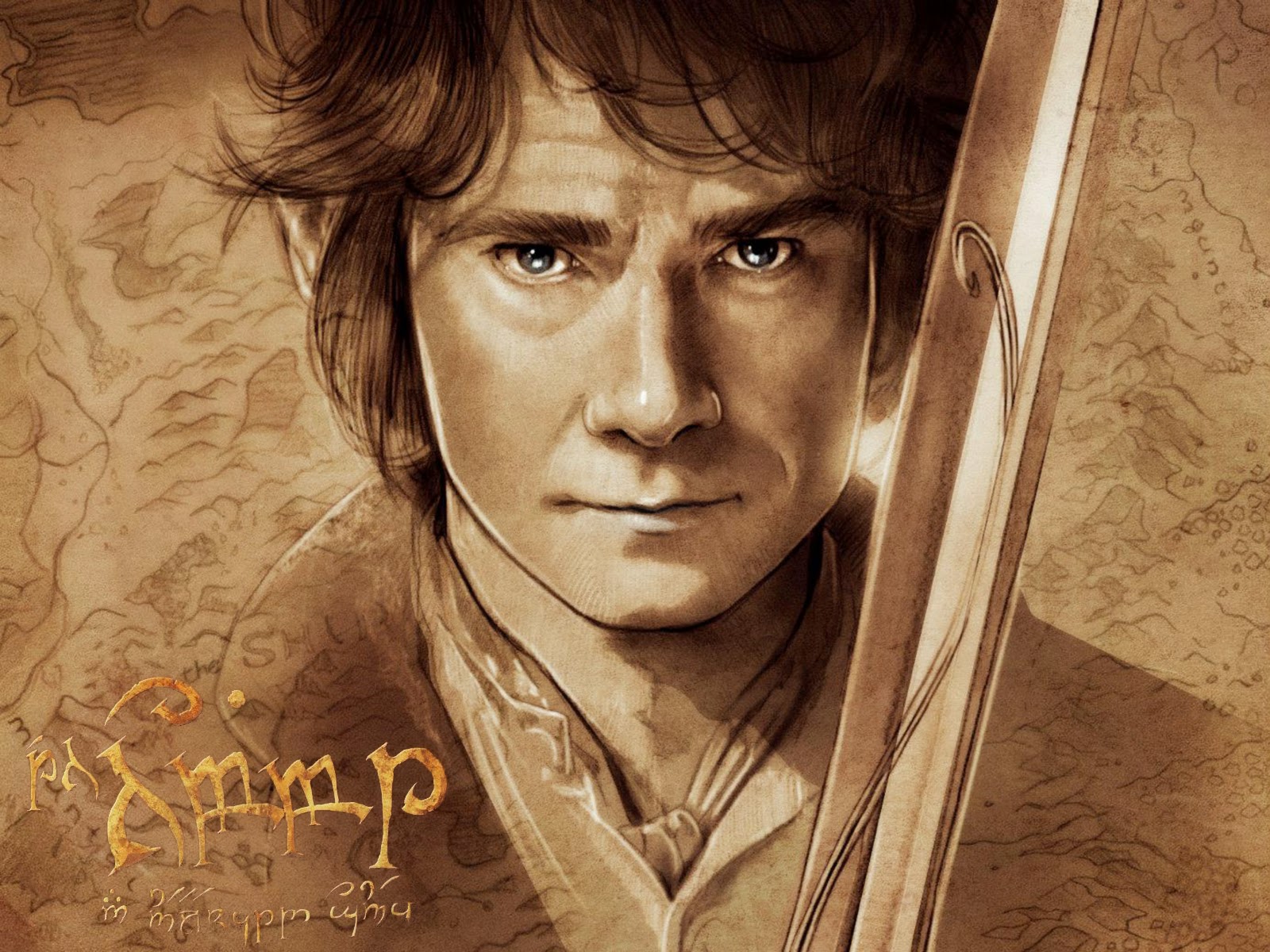
Now, this isn't something I've used, but it something I've noticed in a few books, particularly Bilbo Baggins in The Hobbit, or Severus Snape in The Harry Potter Series. It also occurs a lot in comic books. The repeating initial seems to make the name more memorable, in my opinion. If you're having a tough time coming up with a name, try something with alliterative initials.

4. REPEATING FIRST INITIALS AND MIDDLE INITIALS

When you have a large group of characters, it can be hard to name them all. What's even more difficult? Characters with the same initials. Sometimes it works. I have a manuscript where the two secondary characters both start with T, Takeshi Sato and Tawny Saunders. For my manuscript it seems to work, but it may not for everyone. Same thing with giving characters middle initials. A good reason to avoid that middle initials? No one wants to name their character after a known murder or give someone a reason to sue them for having a name too close to their own. 

These steps, like many others in writing, can get overwhelming at times, but it pays off in the end. You don't want to name a Japanese character with a Chinese name and have your readers tell you you've screwed up after all is said and done. We want to have the Celtic spelling of Brynt make sense with our Russian character. These characters are our babies, and like with our real children, we want to give them names of their own that have meaning and reason.

What are your tips for choosing the perfect character name? Leave your best name in the comments and tomorrow, 2/27/15, I'll choose a winner for a $15 Starbucks gift card. Look forward to the winner and a new blog post tomorrow!


Friday, January 23, 2015

Hello, my name is __________

Creating characters is one of my all-time favourite parts of writing. People are so very interesting - what they say, what they do when they say it, how their own personal brand of logic works and what, exactly, makes them tick. What better way to let your creative juices run free than to create a character, right? 

Okay, so maybe character creation (or characterisation) is not everybody's cup of tea. How we create the people who populate our imaginary worlds is as individual as a fingerprint - there's whorls and lines and patterns that we can recognise, but everybody has their own personal mix. It may even be different depending on the particular character him/herself. Some of my stories' protagonists simply appear in my head, much like an unwanted guest ringing the doorbell when you're just about to step into the shower. Others have to be coaxed out of hiding, an often painful and certainly frustrating process. Some characters make you wait until almost the entire story is done before they even let you know their name. 


The problem with characters is that they often fall flat when compared to reality. They lack depth, and as such, don't come across as sufficiently realistic to the reader. A book full of cardboard-cutout characters is not very likely to succeed, at least not on its own merits. There are some bestselling counterexamples, but let's not go there - to give a cliche saying it's place: if someone jumps off a bridge and makes the news because of it, does that mean jumping off a bridge is the only way to get your fifteen minutes of fame? 

I certainly hope not! 

When I write, I try to think of my characters as real people. Character interviews help me do this, and you wouldn't believe the surprising factoids that can turn up when you do that. The better you know your characters, and that means hero, villain and everyone in between, the better you'll be at judging their reactions in any given situation the plot might throw at them. I sometimes let my characters talk to each other on random topics to get a feel for how they should react to each other in the actual story. But my favourite way of getting to know them is to sit in front of the fire and let them talk to me... 

Tessa Conte sits in a comfy armchair before a happily dancing hearth-fire in a room full of books and leather. She has a yellow legal pad on her lap, and is busily chewing the end of her pencil. 

There's a knock at the door.

TC: 
Come in, please.

A man enters the room, dressed in a desertman's garb, all loosely flowing robes and leather belts holding it all together. He's armed with at least two blades -  a sword on his back and a knife in his belt - that Tessa can see, but there's bound to be more. He comes to a stop before Tessa's chair. 

TC (waits a bit, tapping her pencil against the legal pad): 
Well? Are you going to sit down? (He sits and pulls off the black turban and veil) Thank you. So, what are we talking about today? How about we start with you introducing yourself to the audience?

R: I'm Rashid.

TC: That's it? Just Rashid?

R (he's studying the room, the fire, the books, anything but looking straight at Tessa): Yes. I'm the Peacemaker's guard.

TC (frowns): Care to elaborate on that? And why aren't you looking at me?

R (deliberately turns his head to look straight at a spot behind Tessa's right shoulder): I'm just a guard, I shouldn't be looking at you. (he jumps up starts pacing in front of the chair) I should not sit in your company, my lady.

TC (watches him for a bit): Are you looking for threats, Rashid? (he just nods) So you'd protect me, too, then?

R (clearly startled, he meets Tessa's gaze and she sees that his eyes are a strangely mezmerizing honey shade): Yes, my lady. Of course I would! That's my purpose, is it not?

TC: To protect?

R (frowns, then nods as if he needs to reassure himself of this): Yes. I protect, that's what I'm here for. There's nothing else for me, is there?

TC: You don't sound very certain of that.

R (looks into the fire; his hand is resting on the hilt of his dagger, clenching and unclenching): I don't know what to think. I have no memory older than the day I was given into the Peacemaker's service, you know that, don't you? How am I to know what or who I was before then? It should not matter. I know I can't be that anymore, that I'm not allowed to, but...

TC (leans forward): 
But?

R: 
But there's something there, shadows, echoes of something...

TC (sits back in her chair): 
We'll figure it out, don't worry.  


This is an interview I did with the MC of one of my ongoing projects. Before I sat him down and wrote my way through this interview, I had no clue about the gap in his memories - adding that little tidbit helped clear up a major snafu in my plot line. It also helped me see how overly focused he was on protecting (the peacekeeper or anyone else, really). I still have to work on that, though the instinct to protect 'his people' is a big thing for Rashid, before and after the memory loss. 

So that's what I do to get to know my characters - we sit down, all civilised, and have a chat. Once I know them a little, I make lists. Lists of likes, dislikes, physical characteristics, childhood memories, allergies, thoughts and feelings and anything else I can think of. I write it down and add it to my story file, so it'll be there when I'm stuck on a particular scene or dialogue. Writing things down also helps keep the little facts consistent. When you're on your nth reread, some things may fail to register, may even slip past an editor, but you can bet on your readers noticing every little mistake, and at the very least it will stop the flow of their reading. 

It's vital to keep your characters in line, and if they do dance to their own tune, make sure the reader knows why. 

If you're a fellow writer, what do you do to keep things real with the people you put down on paper? Do you like talking to your characters, too?

As a reader, what is most important to you regarding literary characters? Are you a stickler for consistency or can you overlook some mistakes as long as the character feels real to you?